Order Block: Overview, Formation, Types, Identification, Trading Guide

 Author

 Editor
Order Block is a popular concept among traders, specially SMC and ICT traders, because it helps them align their trade with institutional orders. Order Block allows traders to find the specific zones where the interests of the institutions are likely to be active
Traders use Order Blocks to plan high-probability entries, keeping tight stop-loss, and maintaining favorable risk-to-reward ratio. The concept of Order Block works across all time frames, which makes it suitable for all types of trades.
What does Order Block Mean?
The order block is a specific price zone on the chart where large institutions such as banks or smart money place significant buy or sell orders. The order blocks are formed just before the impulsive move in the market which later acts as a key support or resistance level due to concentrated unfilled orders.
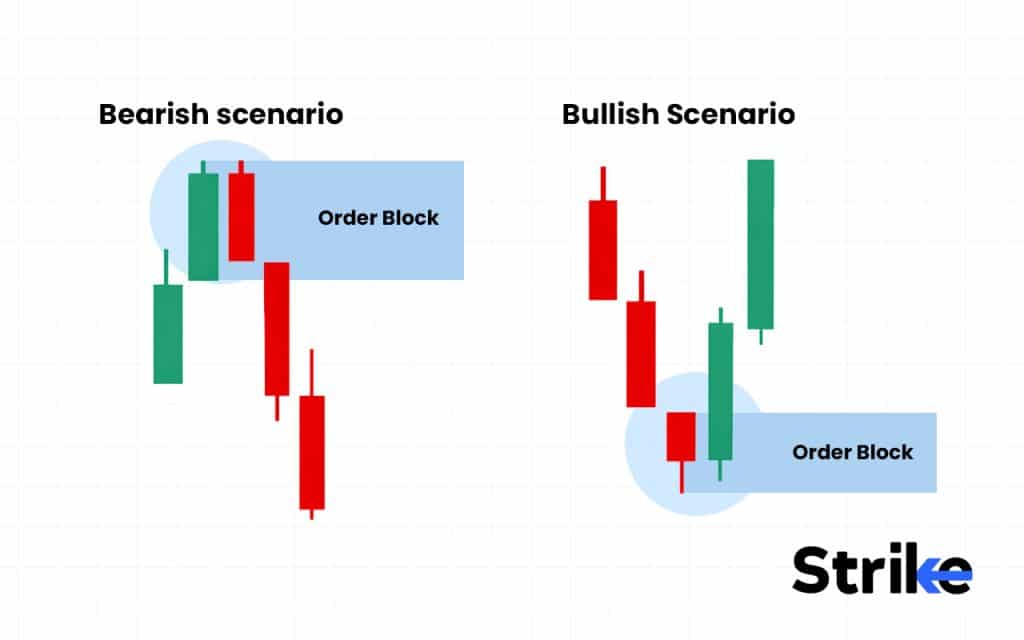
Traders use these order blocks to identify the high probability setups, specially in price action and smart money-based trading.
Why Order Blocks Form?
The order blocks are formed because institutional traders need liquidity to execute large orders. Since these large orders cannot be executed instantly, institutions gradually keep accumulating the positions at different price points instead of a single price which creates a zone. Once the enough orders are filled, price aggressively moves in one direction, leaving that marked area as an order block.
During the formation of order blocks, institutions or smart money hunt liquidity by sweeping equal highs or lows, filling their pending orders using retail participation as counterparties. When price later revisits this zone, it often reacts due to unfilled institutional orders.
Who Invented the Order Block Concept?
The order block concept was invented by Michael J. Huddleston, who is also known as the Inner Circle Trader (ICT). His concept of order block was popularised in the early 2010s through his mentorship series. He developed this concept to help retail traders spot the institutional footprints for potential entries, using concepts like liquidity sweeps and market structure.
What are the Types of Order Block Strategy?
Order blocks can be categorised into six major types based on market structure and direction bias.
Bullish Order Block
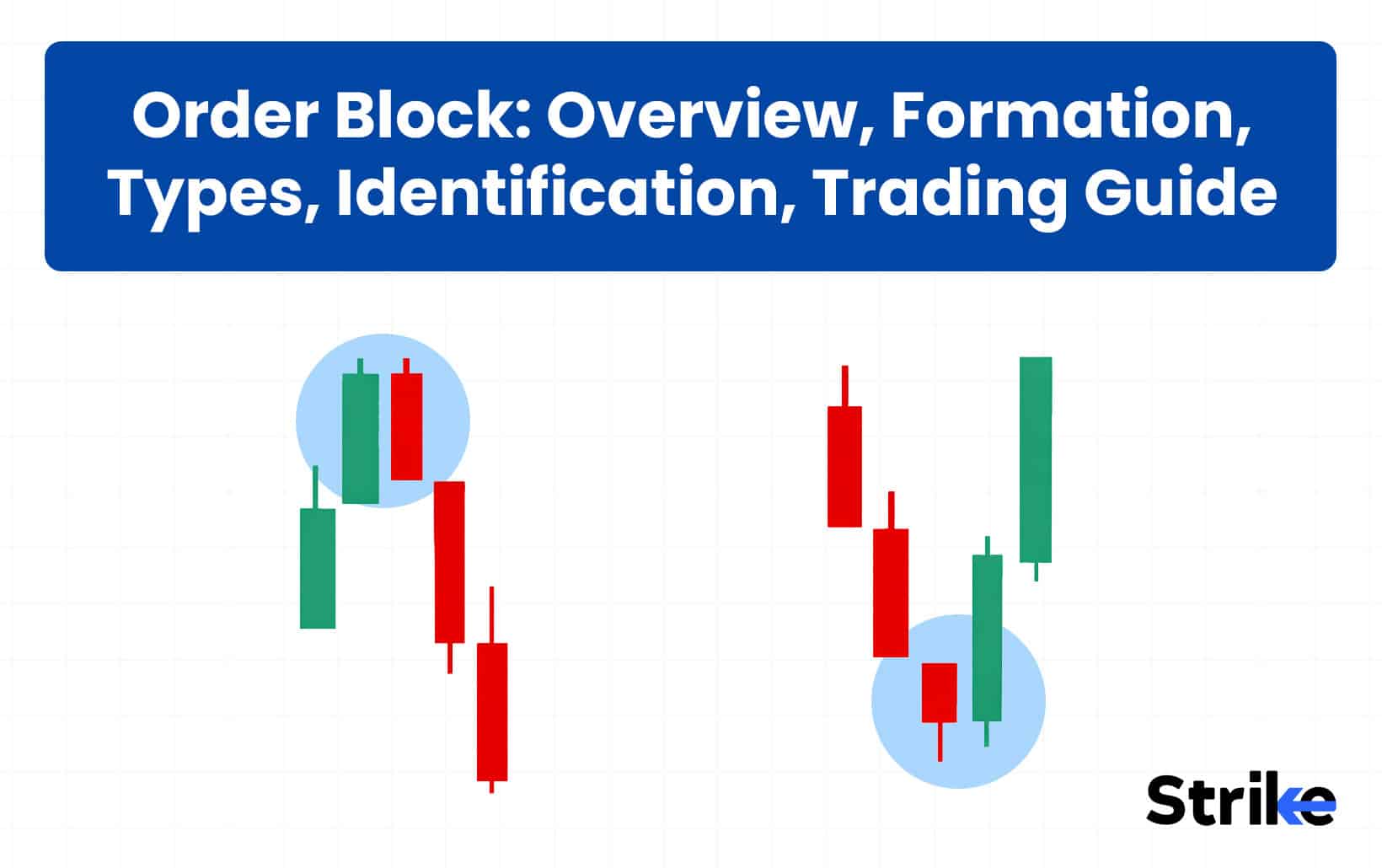
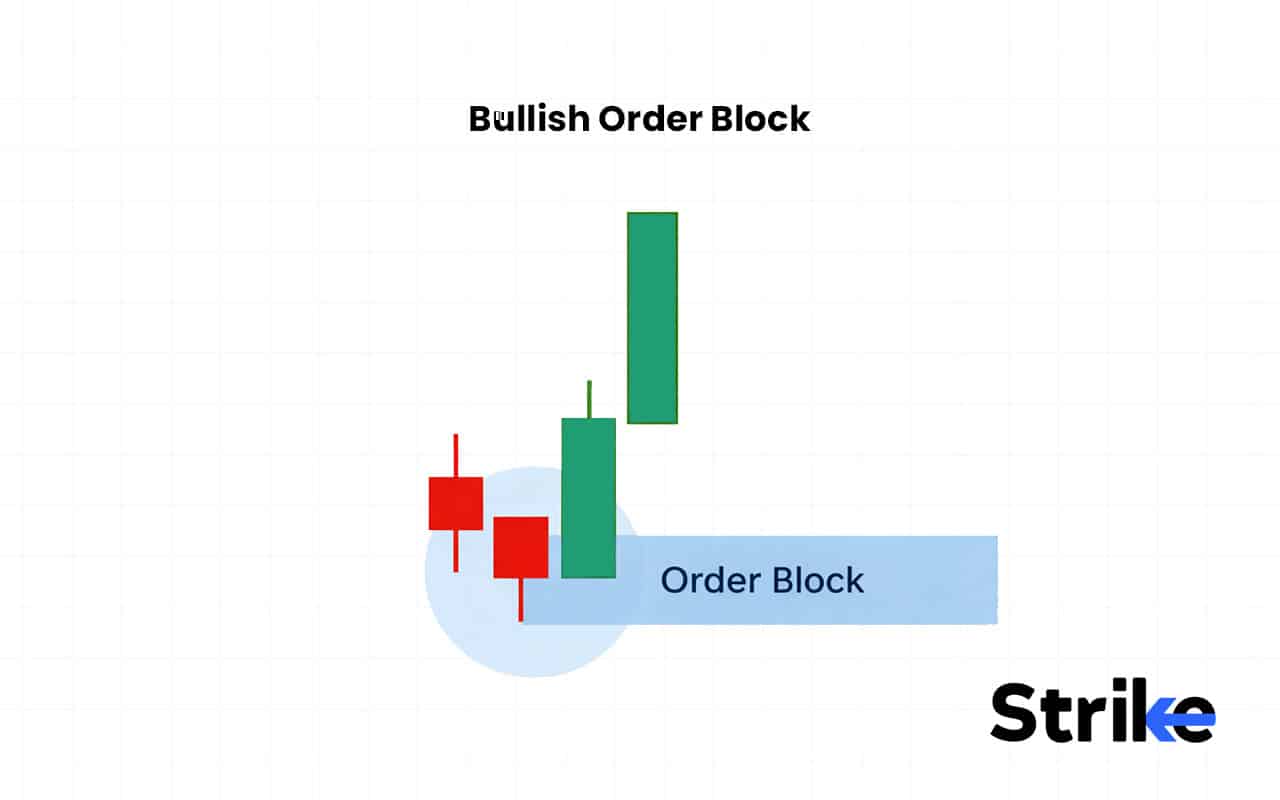
The Bullish Order Block is formed when institutions or smart money accumulate large buy orders before a strong upward move. The Bullish order block can be identified as the last bearish candle before an impulsive bullish rally, which often acts as a demand zone.
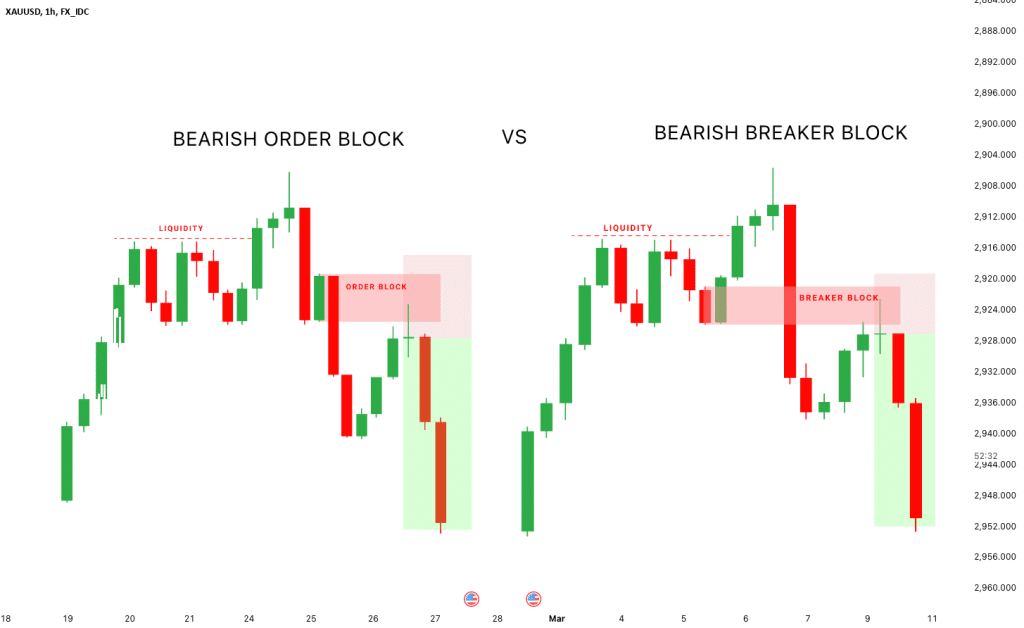
Bearish Order Block
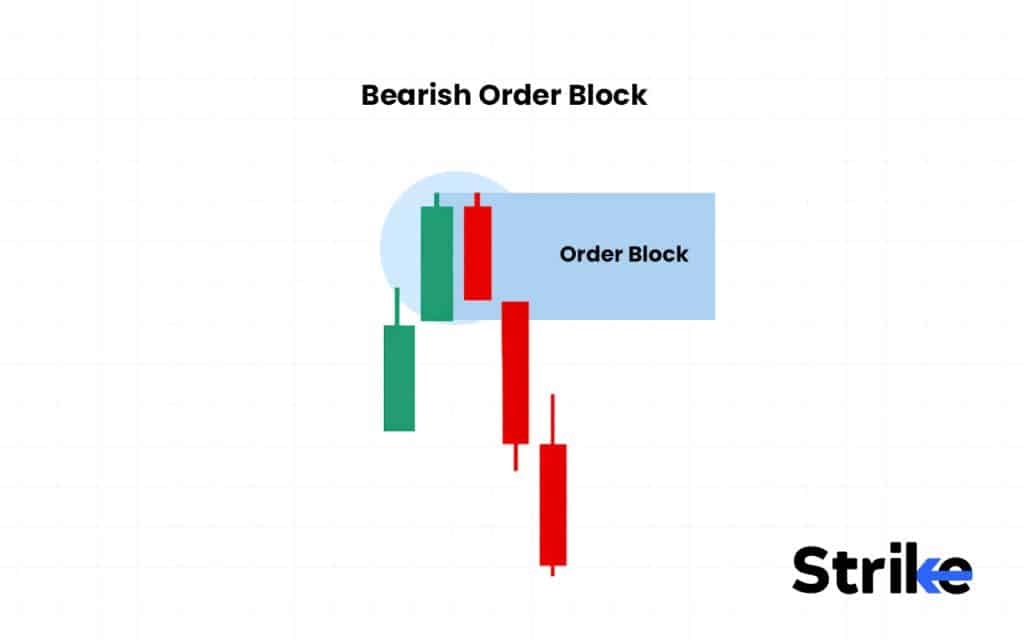
The Bearish Order Block is formed when institutions or smart money accumulate large sell orders before a strong downward move. The bearish order block can be identified as the last bullish candle before an impulsive bearish rally, which often acts as a supply zone.
Continuation Order Block
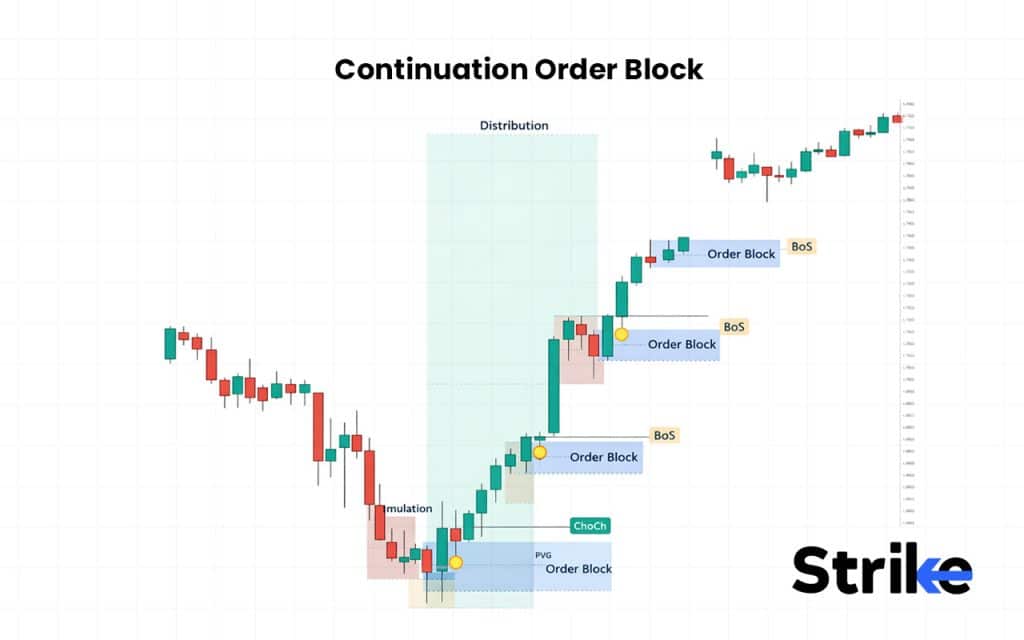
Continuation order block forms within an existing trend representing re-accumulation in uptrend and re-distribution in downtrend allowing price to pause temporarily before continuing the ongoing trend.
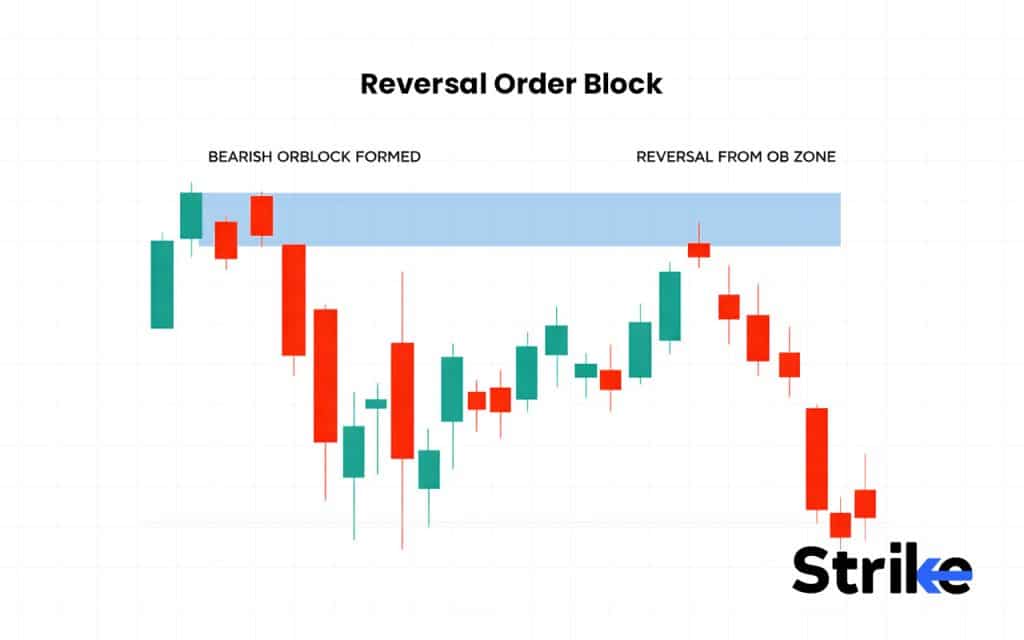
Reversal Order Block
Reversal order blocks are formed near the potential market tops and bottom where institutions or smart money shifts from accumulation to distribution or vice versa.
Breaker Blocks
The break order block is formed when a valid order block is failed or violated and reverses its role. If the support order block is broken then it will act as a resistance and when the resistance order block is broken, it acts as a support.
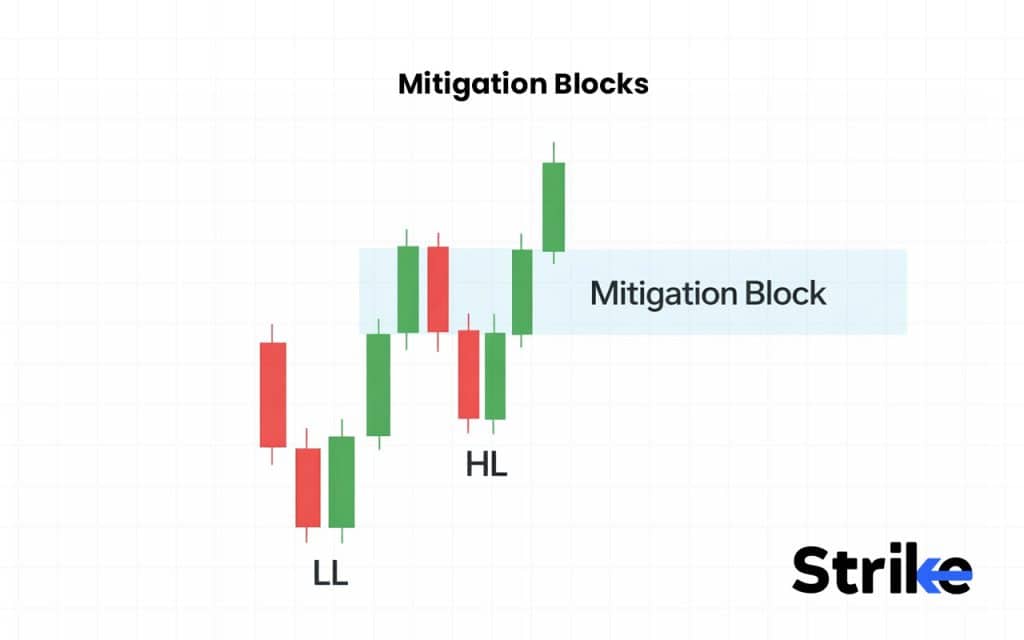
Mitigation Blocks
Mitigation blocks are formed when price returns to the previous order block for mitigation (reduce or exit) of existing position. These blocks are seen before the next impulsive move and are an important area for smart money rebalancing.
Together, these order block types help traders understand “where” and “why” institutions are likely to act, allowing trailers to plan trade alongside them.
Is Order Block a Reliable Trading Strategy?
Yes, an order block is a reliable trading strategy, but their effectiveness largely depends on how they’re identified, confirmed, and combined with other signals.
According to results published on education.signalpilot, standalone order blocks without any structure confirmation like BOS or ChoCH, have a win rate of 52% based on analysis of over 2,400 setups across SPY, QQQ, and BTC from 2022-2024. However, the win rate of order blocks increased to 65-68% once combined with break of structure (BOS) or change of character (ChoCH).
Hence, an order block is a reliable trading strategy, but on its own an order block can be less reliable and may lead to poor results if traded without structure, validation, and proper Technical Analysis.
How to Identify a Valid Order Block
There are six major criteria to check to validate the Order Block. The criterias are mentioned below.
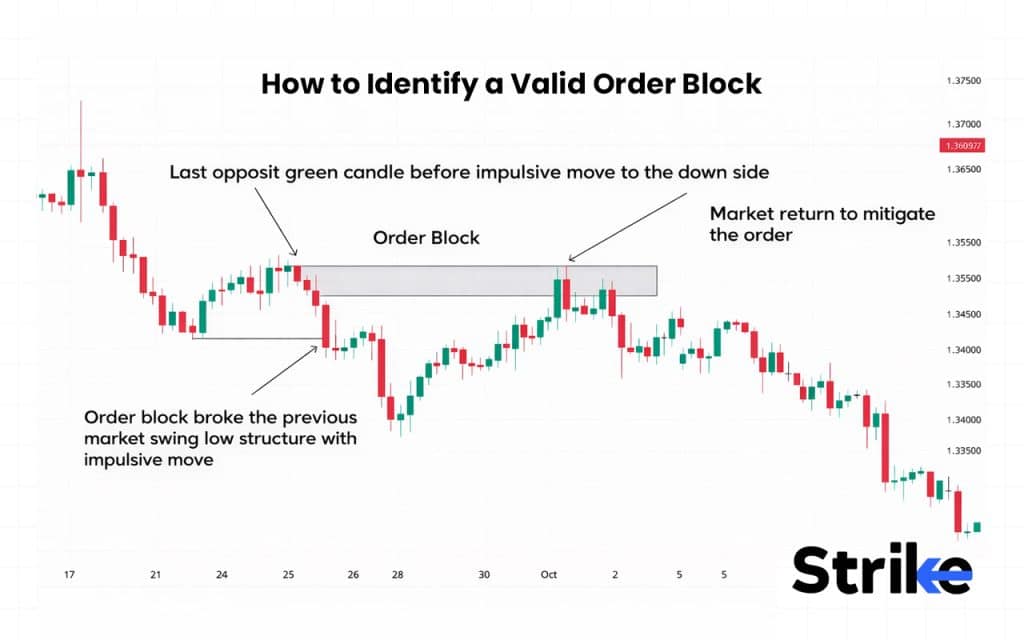
- Must appear before an impulsive move: Order block appears just before the strong impulsive move, showing that institutions were building up position.
- Look for strong displacement: Price should move sharply in one direction after the block formation, confirming the institutional involvement.
- Identify the last opposite candle before the move: The final candle opposite to the upcoming trend (bearish before uptrend, bullish before downtrend) marks the order block zone.
- OB must break structural level or internal liquidity: The move after the block should break key support/resistance or liquidity areas, showing the block is genuine.
- Market must return to mitigate the block: Price usually revisits the block area to allow institutions to adjust or exit positions, confirming its significance.
- Volume spike or institutional footprints strengthen validity: High volume, big wicks, or other smart money signs make the block more reliable as a key supply/demand zone.
When these conditions align, especially during a strong Breakout supported by rising Volume, it reflects genuine institutional interest rather than a random price level.
What Candle Forms the Order Block?
An order block is formed by the last opposite candle before a strong impulsive move in the one direction. For a bullish order block, the last bearish candle before the bullish impulsive move forms the order block. Whereas, for a bearish order block, the last bullish candle before the bearish impulsive move forms the bearish order block.
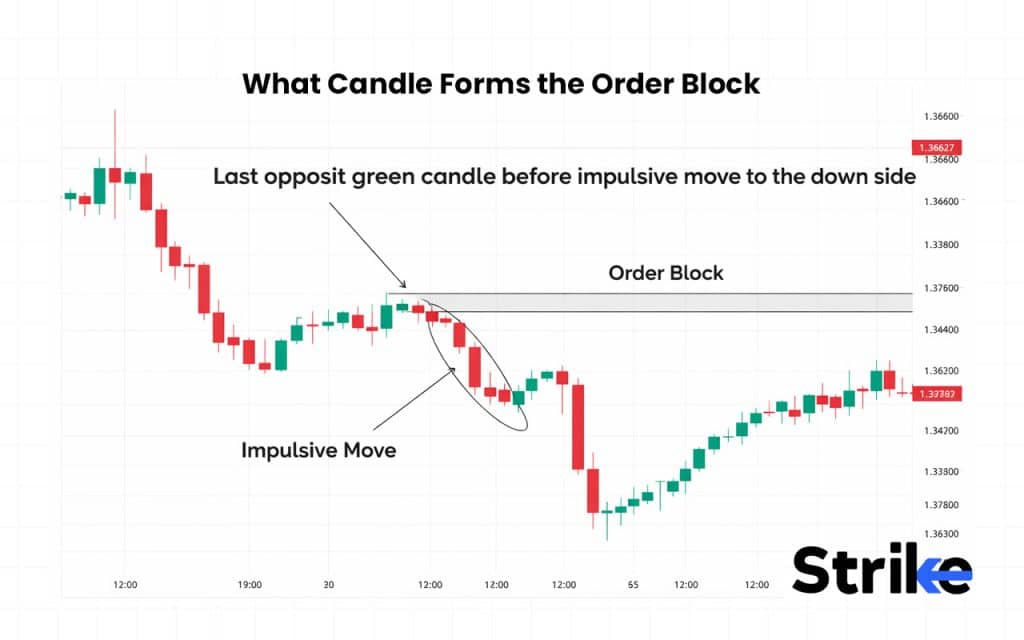
This candle represents the institutional accumulation or distribution zone. However, not every last opposite candle forms an order block; it must follow strong structural displacement, a clear structural break, and confirmation through reliable Candlestick Patterns.
How Do You Know if an Order Block is Strong?
The order block is considered to be strong when it leads to a clear impulsive move, breaks market structure, and price reacts quickly when it revisits the zone. The strong order blocks are often led by displacement, clean mitigation, and visible institutional footprints such as high volume or long wicks.
Are Higher Timeframe Order Blocks Stronger?
Yes, higher timeframe order blocks are generally more reliable compared to lower time frames. Higher time frames such as 4hrs, Daily, and weekly reduces the market noise and shows clear long-term institutional participation. As a higher timeframe takes more time and absorbs significant amounts of liquidity, these Order blocks often lead to major structure breaks, trend changes, or strong continuations, and price usually reacts clearly when it revisits them.
The reliability of the Order Blocks on different time frames is mentioned below in the table.
| Timeframe | Relative Strength | Who Forms Them | Reliability | Best Trading Use |
|---|---|---|---|---|
| Monthly / Weekly | Very High | Banks, funds, institutions | Extremely high | Long-term bias, major reversals |
| Daily / 4H | High | Institutions, swing traders | High | Swing trades, key demand/supply zones |
| 15m / 5m | Medium | Active traders, algos | Moderate | Entry timing with HTF alignment |
| 1m–3m | Low | Scalpers, noise | Low | Precision entry only |
Ultimately, the real power of order block comes from timeframe alignment. The higher timeframe order blocks define the market intent, while the lower timeframe order blocks help in trade execution.
How do You Trade Order Blocks?
The trading order block involves five major steps. The steps include identifying the order block, defining directional bias, waiting for mitigation, confirming the order block and trade execution.
- Identify the Order Block: Mark a valid order block on chart, preferably on a higher timeframe such as 4hrs or Daily. For a bullish order block, mark the last bearish candle before bullish impulsive move. For a bearish order block, mark the last bullish candle before a bearish impulsive move.
- Define Directional Bias: Look only for buy setups during formation of bullish order block and for sell setups during the formation of bearish order block.
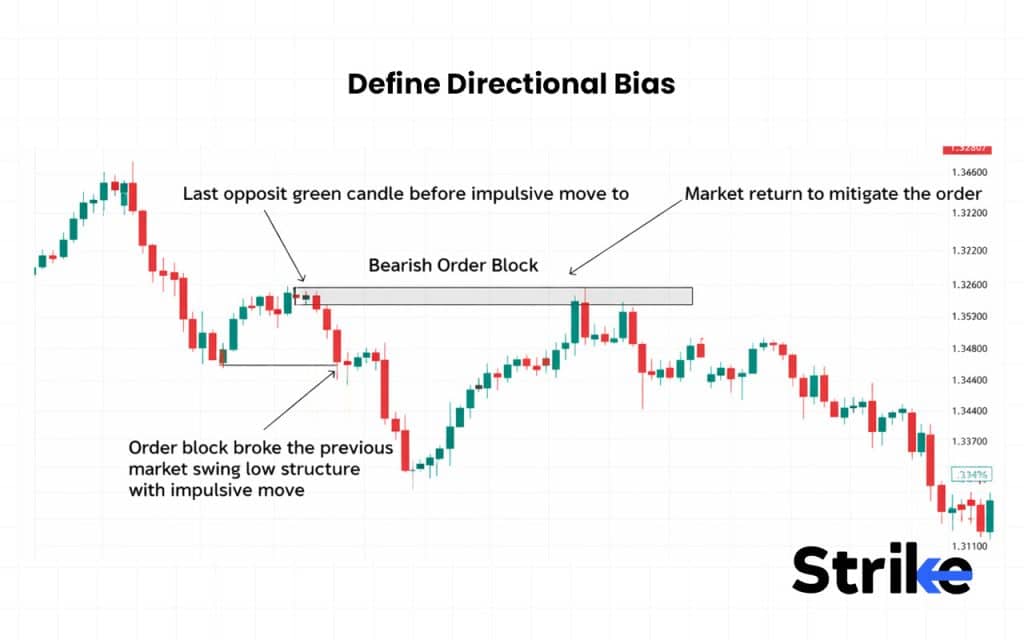
- Wait for Price to Return: Allow price to come back and mitigate the order block.
- Confirmation: Wait for the market to shift structure, show strong rejection, or displacement in the direction of your bias. Drop to the lower time frame if you have a market order block on a higher timeframe.
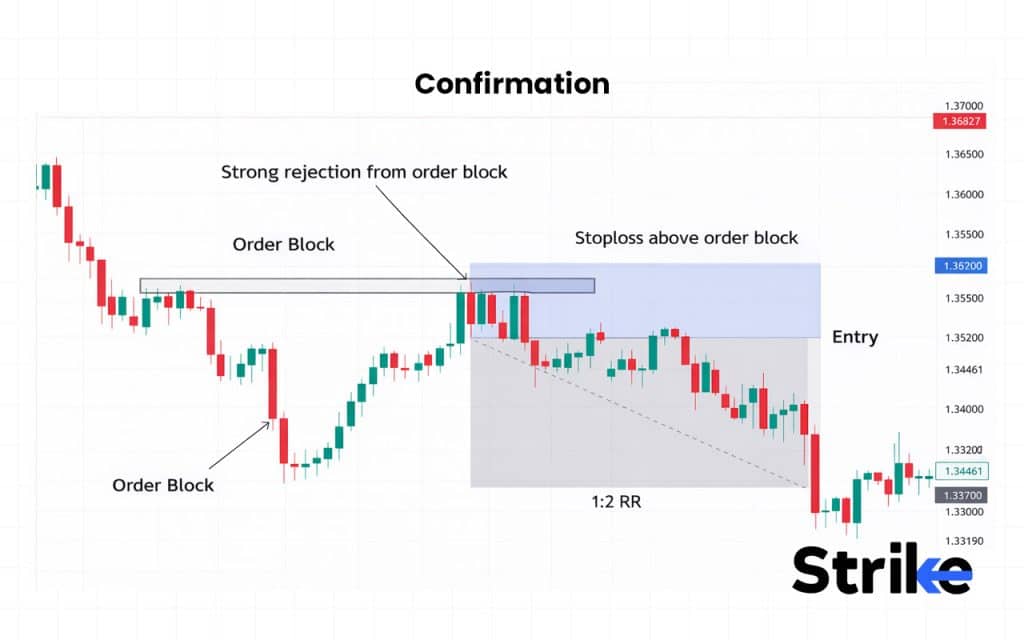
- Execution and Risk Management: Enter the trade after a confirmation and place stop-loss below the order block. The profit target can be set to the previous highs or lows or liquidity zones with at least 1:2 RR.
Traders can approach order block trading in a structured and disciplined way by following these steps. This reduces the emotional decisions and increases the probability of trading in sync with institutions.
How do you Confirm an Order Block?
An order block is confirmed when price leaves the zone with strong momentum, breaking the market structure or liquidity. Confirmation of order blocks increases when price shows immediate rejection after revisiting the zone, displacement in the expected direction, or a shift in structure on a lower timeframe, indicating that institutions are still defending the zone.
What are the Benefits vs Limitations of Order Blocks?
The benefits and limitations of the order block are mentioned below in the table.
| Benefits of Order Blocks | Limitations of Order Blocks |
|---|---|
| Aligns traders with institutional (smart money) activity | Subjective identification can vary between traders |
| Provides precise entry zones with tight stop-loss placement | Not every marked order block gets respected |
| Improves risk–reward ratios when traded correctly | Requires market structure and liquidity understanding |
| Works across all markets and timeframes | Can fail in choppy or low-volume markets |
| Reduces reliance on lagging indicators | Needs confirmation; blind entries increase risk |
| Helps identify high-probability support and resistance zones | Lower timeframe order blocks are less reliable without HTF bias |
Knowing the benefits and limitations helps traders use order blocks effectively while managing risk.
How is Order Block Different from Supply/Demand Zones?
An Order Block is based on institutional intent where it pinpoints the exact candle or tight consolidation before the impulsive move, often followed by Fair Value Gap (FVG).
Whereas, Supply / Demand zone is based on price action which covers broader imbalance regions formed by multi-wave patterns like rally-base-drop.
How do FVG and Order Blocks Work Together?
Fair Value Gap (FVGs) and Order Blocks (OBs) complement each other in ITC or Smart Money Concept (SMC) by combining price imbalance and institutional intent within the same price move.
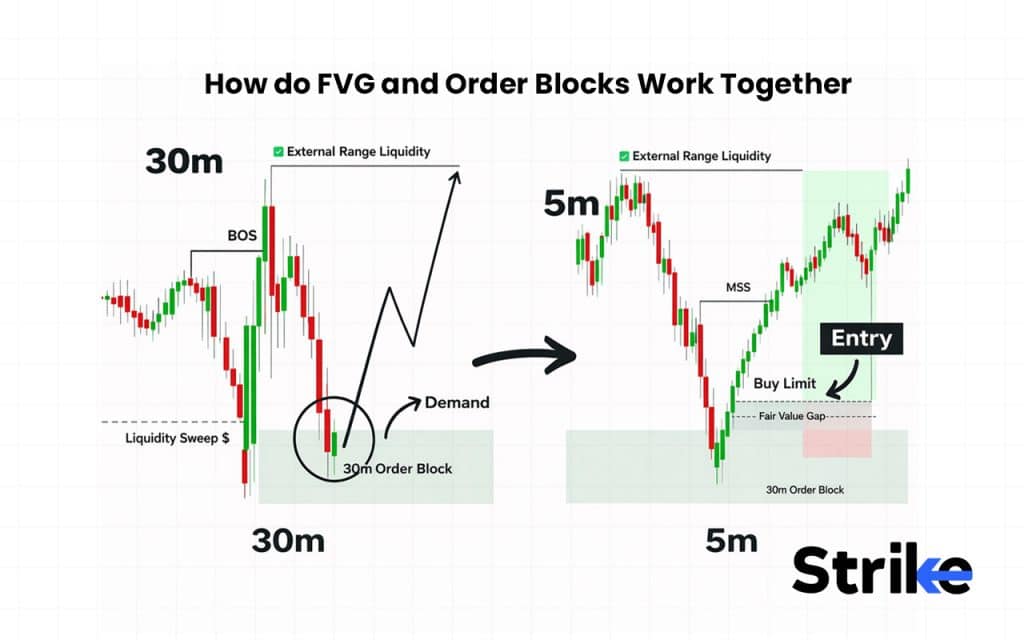
Typically order blocks create an impulsive move which leaves FVG behind. When price returns, institutions often defend the order block, while the market simultaneously seeks to rebalance the FVG. When both align in the same area, the probability of a strong reaction increases sharply.
Is Order Block SMC or ICT?
The Order Block belongs to both SMC and ICT, but they are not identical in their application.
At a core level, Order Blocks originate from Smart Money Concepts (SMC). SMC is a broad framework focused on understanding institutional behavior, liquidity, and market structure. Order blocks were introduced as zones where institutions accumulate or distribute positions before a strong move.
ICT (Inner Circle Trader) is a specific methodology built on top of SMC. ICT did not invent order blocks, but it refined and standardized how they are identified, validated, and traded. In ICT, order blocks are more rule-based and are often used alongside market structure shifts, liquidity sweeps, and Fair Value Gaps (FVGs).
Is Order Block a Price Action Concept?
Yes, Order Block is a price action concept, but they represent advanced price action not the traditional retail price action.
Order Blocks are purely identified using price movement, such as candles, highs/lows, structure breaks, and displacement. It does not involve use of any indicators or traditional patterns, instead they focus on institutional behavior hidden inside price.
 19 mins