Best Port & Port Services Stocks to Invest Oct, 2026
India’s expanding trade volumes and infrastructure push fuel investor interest in port and port services stocks, critical enablers of maritime logistics and global commerce. According to the Ministry of Ports, Shipping and Waterways, India’s port sector was valued at over ₹1.4 lakh crore in 2024 and is projected to grow at an 8.5% CAGR, reaching₹2.6 lakh crore by 2030. With over 90% of trade by volume moving through ports, government initiatives like Sagarmala and PM Gati Shakti are driving massive upgrades in port capacity, automation, and hinterland connectivity. These Port & Port Services Stocks are compared against their Share Price, change %, Dow Trend, 52 Week Range, Returns, P/E Ratio, P/BV Ratio, Market Cap. This list of Port & Port Services stocks is constructed based on Strike’s analysis with the help of our market analyst Mr. Sunder Subramaniam. Let’s analyze the top 10 Port & Port Services Stocks in detail.
 Author:
 Editor:
 Updated on: October 21, 2026
Port & Port Services Stocks Performance Analysis
Showing top performers in Port & Port Services Stocks

Indiacharts
SEBI Registered Research Analyst
| BUY/SELL | TREND | VOLUME | 52 WEEK RANGE | 1M RETURN | 3M RETURN | 6M RETURN | 1Y RETURN | ||
|---|---|---|---|---|---|---|---|---|---|
| ATL | 25.91CHG: -7.07% | SELL | Sell | 2,63,080 | 18.2035.02 LH | 6.67% | 8.36% | -1.67% | -21.22% |
| GPPL | 163.78CHG: -1.38% | SELL | Sell | 7,78,474 | 141.55200.09 LH | -0.73% | 8.61% | 3.17% | 1.58% |
| ADANIPORTS | 1,748.80CHG: -0.97% | SELL | Sell | 22,98,918 | 1,292.001,891.10 LH | -2.14% | -5.29% | 9.70% | 18.68% |
| JSWINFRA | 320.55CHG: -2.55% | SELL | Sell | 26,69,087 | 233.42375.50 LH | -8.31% | -6.97% | 15.92% | 7.55% |

List of Port & Port Services Stocks to Invest
1. Allcargo Terminals Ltd.
Allcargo Terminals Ltd. is currently trading at ₹25.91. It has a daily trading volume of 2,63,080. Allcargo Terminals Ltd. touched a 52-week high of ₹35.02, while the 52-week low stands at ₹18.20. While Nifty delivered -2.58% return over the 1 year, Allcargo Terminals Ltd. underperformed with a -21.22% return.
2. Gujarat Pipavav Port Ltd.
Gujarat Pipavav Port Ltd. is currently trading at ₹163.78. It has a daily trading volume of 7,78,474. Gujarat Pipavav Port Ltd. touched a 52-week high of ₹200.09, while the 52-week low stands at ₹141.55. While Nifty delivered -2.58% return over the 1 year, Gujarat Pipavav Port Ltd. outperformed with a 1.58% return.
3. Adani Ports & Special Economic Zone Ltd.
Adani Ports & Special Economic Zone Ltd. is currently trading at ₹1,748.80. It has a daily trading volume of 22,98,918. Adani Ports & Special Economic Zone Ltd. touched a 52-week high of ₹1,891.10, while the 52-week low stands at ₹1,292.00. While Nifty delivered -2.58% return over the 1 year, Adani Ports & Special Economic Zone Ltd. outperformed with a 18.68% return.
4. JSW Infrastructure Ltd.
JSW Infrastructure Ltd. is currently trading at ₹320.55. It has a daily trading volume of 26,69,087. JSW Infrastructure Ltd. touched a 52-week high of ₹375.50, while the 52-week low stands at ₹233.42. While Nifty delivered -2.58% return over the 1 year, JSW Infrastructure Ltd. outperformed with a 7.55% return.
Top Return Givers among Port Stocks
Top Movers in Port Stocks
What are Port & Port Services Stocks?
Port and port services stocks represent shares of companies involved in cargo handling, logistics, and port infrastructure operations. These firms generate revenue through container handling, bulk cargo, warehousing, and logistics support.
India’s port sector, valued at over ₹1.4 lakh crore in 2024, is projected to grow at an 8.7% CAGR through 2030. Driven by surging trade volumes, the PM Gati Shakti plan, and private terminal investments, the sector is gaining investor interest.
Companies like Adani Ports, DP World, and JSW Infrastructure are expanding container capacity, automating logistics, and securing long-term cargo contracts. Investors should assess cargo mix, throughput growth, and port connectivity.
Why You Should Invest in Port & Port Services Stocks?
You should invest in Port & Port Services Stocks for 4 main reasons. The reasons are Cargo Volume Growth, Government Policy Support, Strategic Infrastructure Investments and Operational Efficiency Gains.
- Cargo Volume Growth: India’s major ports handled 855 million tonnes of cargo in FY25, up 4.3% YoY, driven by increased container traffic (10%) and fertiliser handling (13%). Companies like JSW Infrastructure reported a 16% rise in cargo volumes, boosting profits by 46%.
- Government Policy Support: Initiatives like Sagarmala and Maritime India Vision 2030 aim to increase port capacity to over 3,500 MMTPA by 2030. The government plans to invest $82 billion in port infrastructure by 2035.
- Strategic Infrastructure Investments: Projects like the ₹44,000 crore International Container Transhipment Port at Galathea Bay are set to enhance India’s maritime capabilities. Adani Ports is expanding its container handling capacity to meet growing trade demands.
- Operational Efficiency Gains: The Adoption of digital technologies and automation is reducing turnaround times and improving efficiency. For instance, Mundra Port has implemented advanced cargo handling systems, leading to faster processing and increased throughput.
With robust cargo growth, supportive policies, and strategic investments, port operators like Adani Ports, JSW Infrastructure, and Syama Prasad Mookerjee Port are well-positioned to capitalise on India’s expanding maritime trade and infrastructure development.
What is the Future of Port & Port Services Stocks?
Port & port services stocks are gaining attention as India ramps up its trade infrastructure and cargo capacity. With over 95% of India’s trade by volume handled through ports, the sector is projected to grow at a CAGR of 8% over the next five years, supported by increasing exports, containerisation, and global shipping demand.
Port & port services stocks like Adani Ports (₹2.4 lakh crore market cap in 2024) and DP World India are expanding terminal capacity, automating logistics, and investing in multimodal transport. Government initiatives like the PM Gati Shakti and Sagarmala Programme are further boosting private sector participation and long-term growth visibility.
What Factors Affect Port & Port Services Stock Prices?
Port & Port Services Stock Prices are affected by 3 main factors. The factors are Global Trade Trends, Policy Reforms, Infrastructure Modernisation and Currency Dynamics.
- Global Trade Trends: Rising global trade volumes drive port throughput. In FY24, India’s cargo traffic reached 1.52 billion metric tonnes, benefiting players like Adani Ports, which handled over 400 MMT and saw double-digit volume growth.
- Policy Reforms: Government initiatives like the PM Gati Shakti Master Plan and the Sagarmala Programme enhance port connectivity and efficiency. These policies boost earnings visibility for port operators through improved hinterland access and PPP projects.
- Infrastructure Modernisation: Automation, container terminal upgrades, and deep-draft port development improve capacity and turnaround time. Adani Ports’ ₹20,000 crore capex over the next 5 years aims to make Indian ports globally competitive.
- Currency Dynamics: A stronger rupee helps port operators with foreign currency debt, while a weaker rupee boosts export-led cargo volumes. This dual impact makes exchange rate trends crucial for port stock performance.
As India targets $2 trillion in exports by 2030, efficient and scalable ports like those operated by Adani Ports and JSW Infrastructure are key enablers. Companies aligning with digital upgrades, capacity expansion, and trade-driven demand offer robust long-term investment potential.
What are the Advantages of Investing in Port & Port Services Stocks?
Investing in Port & Port Services Stocks is advantageous for 3 main reasons. The reasons are Strategic Trade Growth, Infrastructure Modernisation and Operating Leverage.
- Strategic Trade Growth: India’s EXIM (export-import) trade is projected to cross $2 trillion by 2030, up from $1.6 trillion in FY24. Ports like Mundra (Adani Ports) and JNPT handle over 60% of India’s container traffic. With global supply chain realignment, India’s coastline is becoming a hub for maritime logistics and international trade.
- Infrastructure Modernisation: Government initiatives under the PM Gati Shakti plan and Sagarmala project aim to boost port capacity and reduce turnaround time. In FY24, Adani Ports increased cargo volumes by 18% YoY through automation and multimodal connectivity upgrades. New port developments in Andhra Pradesh and Tamil Nadu further support regional trade corridors.
- Operating Leverage: Ports operate on high fixed costs with scalable throughput capacity. Once breakeven is achieved, incremental cargo significantly boosts margins. In FY24, Adani Ports achieved an EBITDA margin of over 60%, driven by rising cargo throughput, logistics integration, and cost controls.
With India’s cargo volume expected to double by 2030, well-run port operators like Adani Ports and DP World India offer long-term value through trade connectivity, high-margin logistics, and infrastructure scale. Investors should track companies modernising assets, diversifying cargo, and leveraging inland logistics synergies.
What are the Risks of Investing in Port & Port Services Stocks?
Investing in Port & Port Services Stock is risky for 3 main reasons. The reasons are Regulatory Dependence, Cyclical Trade Volumes and High Infrastructure Costs.
- Regulatory Dependence: Ports operate under multiple central and state-level regulations. For instance, changes in tariff rules by the Tariff Authority for Major Ports (TAMP) in 2023 impacted revenue projections for government-run ports. Adani Ports had to adjust pricing structures at key terminals following a regulatory review, affecting earnings visibility.
- Cyclical Trade Volumes: Port throughput is directly tied to global and domestic trade. In FY21, Indian container traffic dropped by over 5% due to the COVID-related global slowdown. Even in FY24, sluggish exports in the first half affected volume growth across terminals, including Mundra and JNPT.
- High Infrastructure Costs: Building and maintaining port infrastructure requires significant CAPEX with a long gestation period. In FY23, Adani Ports allocated ₹20,000 crore for expanding capacity across eastern corridors and deep-draft terminals. These costs, combined with debt servicing, can weigh on returns during downturns or volume declines.
With volume-linked earnings, high capital needs, and policy exposure, port operators like Adani Ports and DP World India must focus on efficiency, diversified cargo handling, and regulatory compliance. Only companies with integrated logistics and robust hinterland connectivity can deliver steady growth in this asset-heavy sector.
When Port & Port Services Stock Prices Go Up?
Port & Port Services Stock Prices Go Up mainly due to 4 reasons. The reasons are Cargo Volume Growth, Policy Incentives, Privatisation Momentum and Logistics Integration.
- Cargo Volume Growth: Rising trade volumes directly benefit port operators. In FY24, Adani Ports handled 420 MMT of cargo, up 20% YoY, with higher volumes across containers, coal, and crude boosting revenue and valuations.
- Policy Incentives: Government schemes like Sagarmala and PM Gati Shakti promote coastal infrastructure. The ₹6 lakh crore infrastructure pipeline enhances port-led development, improving capacity utilisation and attracting private investment.
- Privatisation Momentum: Asset monetisation under the National Monetisation Pipeline (NMP) has unlocked new opportunities. In 2023, JSW Infrastructure won PPP bids to operate berths at Paradip and Mormugao ports, expanding its national footprint.
- Logistics Integration: Vertical integration into rail, warehousing, and ICDS supports margins. Adani Ports’ acquisition of Haifa Port and inland logistics hubs improved end-to-end service delivery, lifting investor confidence.
Port stocks like Adani Ports, DP World India, and JSW Infra gain from rising trade flows, integrated supply chains, and capex-backed expansion. As India targets a $2 trillion export economy by 2030, these logistics enablers offer strong rerating potential through volume scale and strategic assets.
When Port & Port Services Stock Prices Go Down?
Port & Port Services Stock Prices Go Down mainly due to 3 reasons. The reasons are Trade Slowdowns, Regulatory Bottlenecks and High CapEx burden.
- Trade Slowdowns: Port revenues are directly tied to cargo volumes. In FY23, global trade disruptions and falling container demand led to a 7% decline in volumes at Adani Ports’ Mundra terminal, pressuring topline growth and triggering a stock dip.
- Regulatory Bottlenecks: Port operations depend on environmental clearances and policy approvals. Delays in coastal zone clearances stalled DP World’s Vizhinjam expansion, impacting project timelines and investor sentiment.
- High Capex Burden: Port infrastructure demands heavy investment. JSW Infrastructure’s ongoing ₹4,000 crore expansion added short-term debt pressure, weighing on its return ratios despite long-term potential.
Port stocks like Adani Ports, DP World, and JSW Infra face near-term risks from trade fluctuations, policy delays, and capital intensity. Investors must monitor project execution, debt levels, and cargo diversification to navigate volatility in India’s strategically vital but regulation-sensitive port services sector.
How Do Port Stocks Compare with Logistics or Rail Stocks?
While port stocks benefit from global trade flows, logistics and rail stocks rely more on domestic movement. Port stocks like Adani Ports or Syama Prasad Mookerjee Port earn through terminal handling, whereas rail/logistics players like Concor focus on inland cargo delivery.
Port stocks have higher capex but also offer superior operating leverage when cargo volumes rise, unlike asset-light logistics models.
What Role Does Coastal Shipping Play in Port Sector Growth?
The Indian government is actively promoting coastal shipping to reduce logistics costs. In FY24, coastal cargo accounted for 22% of total volumes. Sagarmala’s Coastal Berth Scheme has already funded 59 projects.
Increased coastal movement of coal, steel, and food grains through ports like Kandla and Paradip helps improve last-mile connectivity and supports multimodal integration, aiding port operators’ revenue stability.
Update History
This content is regularly updated by our team of industry experts to ensure accuracy and relevance
Mohnish Maurya• 13 Feb 2026
Author
Sunder Subramaniam• 13 Feb 2026
Editor
Strike Research Team• 21 Oct 2026
Data Verification


Find Best Stock from Each Sectors
Key insights into stock market trends and strategies
Strike
PROFESSIONAL TRADING PLATFORM
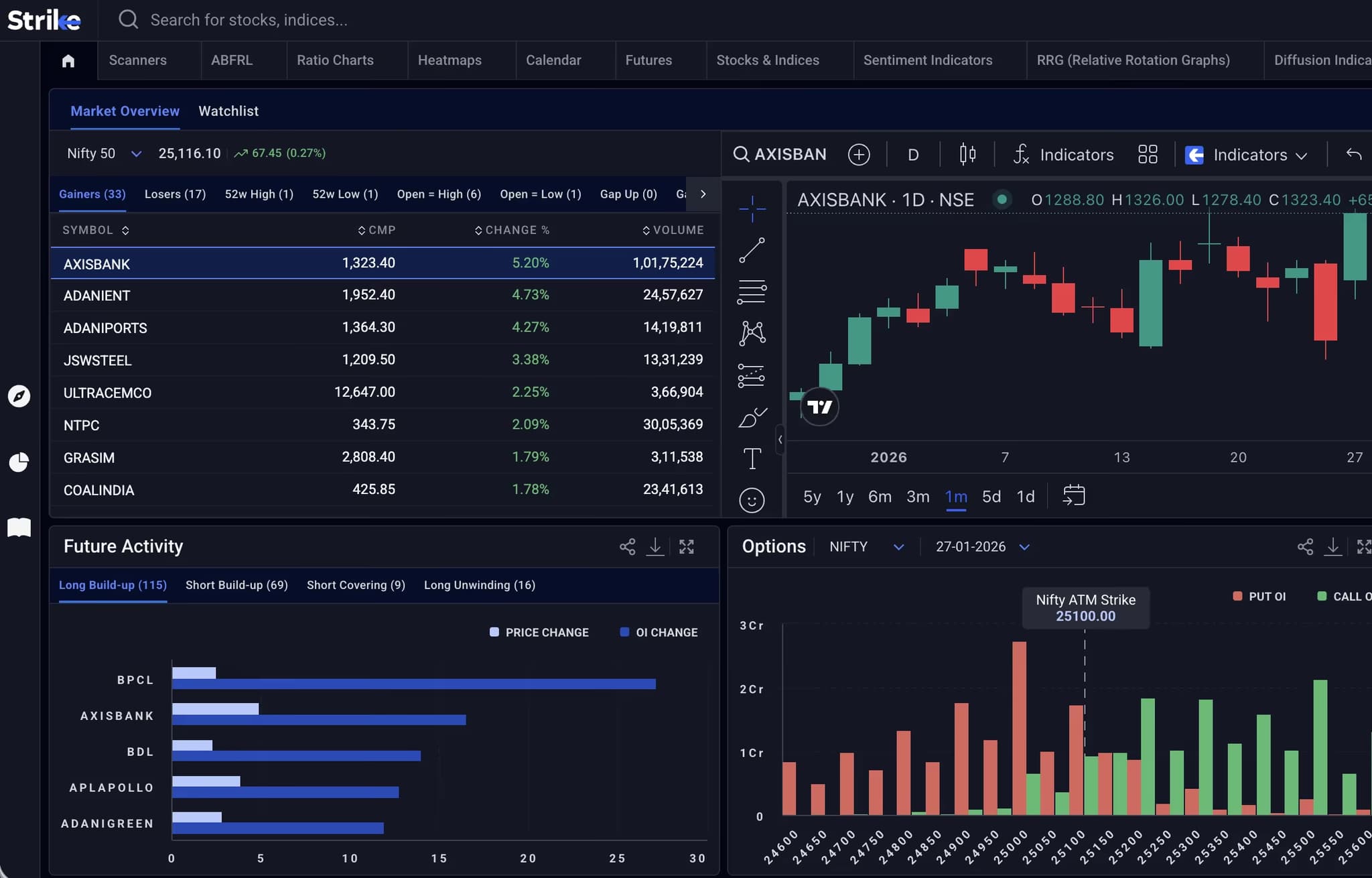
- Real-time market data
- Advanced charting tools
- Institutional-grade analytics
Join thousands of traders worldwide
Join 100,000+ traders receiving our exclusive newsletter with market analysis, trading strategies, and actionable insights.

Weekly Market Analysis
Expert insights on market trends and opportunities
Exclusive Trading Strategies
Proven techniques from professional traders
Free Trading Guide (Worth ₹7,999)
Comprehensive beginner to advanced trading guide
Early Access to New Content
Be the first to read our latest articles

"Strike's newsletter completely transformed my trading approach. The insights are invaluable!"
— Amit Sharma, Active Trader
50K+
Active Traders
$2.5B+
Trading Volume
150+
Markets Covered
24/7
Support Available