Best Packaged Foods Stocks to Invest in Oct, 2026
Indian packaged food inventories are a significant segment of the FMCG industry because they have a huge variety of products like snacks, ready-to-eat foods, beverages, and spice. The market for packaged foods is expected to reach $530 billion by 2028 at a 9.5% CAGR based on the study conducted by IMARC, fueled by changing consumer appetite and increasing urbanization. Packaged food stocks are usually thought of as these being defensive stocks, providing consistent return and portfolio stability. These packaged food stocks are compared to their share price, percentage change, Dow Trend, 52 Week Range, Returns, P/E Ratio, P/BV Ratio, Market Cap. This list of Packaged Foods is constructed based on Strike’s analysis with the help of our market analyst Mr. Sunder Subramaniam. Let’s analyse the top 10 Packaged Foods in detail.
 Author:
 Editor:
 Updated on: October 21, 2026
Packaged Foods Stocks Performance Analysis
Showing top performers in Packaged Foods Stocks

Indiacharts
SEBI Registered Research Analyst
| BUY/SELL | TREND | VOLUME | 52 WEEK RANGE | 1M RETURN | 3M RETURN | 6M RETURN | 1Y RETURN | ||
|---|---|---|---|---|---|---|---|---|---|
| MEGAFLEX | 162.80CHG: 3.43% | BUY | Buy | 2,000 | 43.50165.10 LH | 72.18% | 62.80% | 7.00% | 261.38% |
| SHREERAMA | 57.44CHG: 8.54% | BUY | Buy | 4,49,522 | 37.6271.99 LH | 32.84% | 37.42% | 23.63% | -4.01% |
| GUJRAFFIA | 53.18CHG: -4.98% | SELL | Sell | 7,692 | 35.1088.00 LH | 31.86% | 35.35% | 31.08% | -31.98% |
| HITECHCORP | 411.00CHG: 0.26% | BUY | Buy | 3,453 | 112.00424.50 LH | 26.38% | 28.54% | 184.80% | 115.45% |
| RFBL | 100.00CHG: -2.44% | SELL | Sell | 57,000 | 52.50113.00 LH | 12.99% | 15.07% | - | - |
| SATIPOLY | 38.70CHG: 0.00% | BUY | Buy | 0 | 27.1581.00 LH | 12.17% | -8.94% | 13.82% | -43.91% |
| KNACK | 199.09CHG: -3.17% | SELL | Sell | 7,27,485 | 171.10222.00 LH | 8.99% | 2.39% | - | - |
| WORTHPERI | 158.51CHG: -5.63% | SELL | Sell | 15,515 | 109.00175.00 LH | 6.86% | 10.61% | 14.40% | -0.70% |
| AERONEU | 69.72CHG: -2.30% | SELL | Sell | 1,22,632 | 63.21105.50 LH | 5.48% | -22.22% | -11.47% | -8.52% |
| ESTER | 90.24CHG: -5.13% | SELL | Sell | 95,032 | 68.55120.00 LH | 3.52% | 1.52% | -0.69% | -20.35% |
| TPLPLASTEH | 67.26CHG: -0.19% | SELL | Sell | 1,81,824 | 50.0190.33 LH | 3.43% | -16.64% | -2.72% | -3.36% |
| TCPLPACK | 3,970.00CHG: -5.14% | SELL | Sell | 8,525 | 2,200.004,580.00 LH | 2.29% | 15.79% | 49.64% | 12.47% |
| HALDYNGL | 143.83CHG: -5.12% | SELL | Sell | 97,883 | 85.00166.00 LH | 0.74% | 21.44% | 62.89% | - |
| PARAMPARA | 11.15CHG: 0.00% | BUY | Buy | 0 | 6.8012.95 LH | 0.00% | -4.70% | 1.36% | 35.98% |
| SHRJAGP | 635.00CHG: -1.40% | SELL | Sell | 221 | 590.05801.25 LH | -0.63% | - | - | - |
| SABAR | 9.40CHG: 3.87% | BUY | Buy | 10,00,000 | 3.959.50 LH | -1.05% | 93.81% | 74.07% | 75.70% |
| POLYSPIN | 29.65CHG: -1.17% | SELL | Sell | 622 | 27.5336.49 LH | -1.17% | - | - | - |
| ORIENTLTD | 76.84CHG: -0.14% | SELL | Sell | 759 | 53.72102.30 LH | -2.47% | 8.99% | 25.68% | -17.90% |
| ECOLINE | 174.05CHG: -8.47% | SELL | Sell | 10,000 | 111.00216.00 LH | -4.29% | -10.28% | 43.84% | 29.45% |
| NAHARPOLY | 213.73CHG: -3.16% | SELL | Sell | 3,715 | 200.00326.00 LH | -4.33% | -18.27% | -17.28% | -29.26% |
| DKEGL | 69.50CHG: 0.00% | BUY | Buy | 0 | 60.0089.60 LH | -4.53% | 2.28% | -14.83% | -2.11% |
| BULKCORP | 76.80CHG: -2.66% | SELL | Sell | 12,000 | 38.0587.95 LH | -5.19% | 30.28% | 59.50% | 12.94% |
| EPL | 225.50CHG: -2.39% | SELL | Sell | 15,36,818 | 176.40274.03 LH | -5.90% | -5.03% | -2.29% | 8.39% |
| HUHTAMAKI | 228.17CHG: -3.88% | SELL | Sell | 2,03,691 | 148.60330.00 LH | -6.39% | -13.63% | 20.25% | -14.93% |
| ANTGRAPHIC | 0.68CHG: -2.86% | SELL | Sell | 77,941 | 0.571.17 LH | -6.85% | -10.53% | -20.00% | -35.85% |

List of Packaged Foods Stocks to Invest
1. Mega Flex Plastics Ltd.
Mega Flex Plastics Ltd. is currently trading at ₹162.80. It has a daily trading volume of 2,000. Mega Flex Plastics Ltd. touched a 52-week high of ₹165.10, while the 52-week low stands at ₹43.50. While Nifty delivered -2.58% return over the 1 year, Mega Flex Plastics Ltd. outperformed with a 261.38% return.
2. Shree Rama Multi-Tech Ltd.
Shree Rama Multi-Tech Ltd. is currently trading at ₹57.44. It has a daily trading volume of 4,49,522. Shree Rama Multi-Tech Ltd. touched a 52-week high of ₹71.99, while the 52-week low stands at ₹37.62. While Nifty delivered -2.58% return over the 1 year, Shree Rama Multi-Tech Ltd. outperformed with a -4.01% return.
3. Gujarat Raffia Industries Ltd.
Gujarat Raffia Industries Ltd. is currently trading at ₹53.18. It has a daily trading volume of 7,692. Gujarat Raffia Industries Ltd. touched a 52-week high of ₹88.00, while the 52-week low stands at ₹35.10. While Nifty delivered -2.58% return over the 1 year, Gujarat Raffia Industries Ltd. underperformed with a -31.98% return.
4. Hitech Corporation Ltd.
Hitech Corporation Ltd. is currently trading at ₹411.00. It has a daily trading volume of 3,453. Hitech Corporation Ltd. touched a 52-week high of ₹424.50, while the 52-week low stands at ₹112.00. While Nifty delivered -2.58% return over the 1 year, Hitech Corporation Ltd. outperformed with a 115.45% return.
5. RFBL Flexi Pack Ltd.
RFBL Flexi Pack Ltd. is currently trading at ₹100.00. It has a daily trading volume of 57,000. RFBL Flexi Pack Ltd. touched a 52-week high of ₹113.00, while the 52-week low stands at ₹52.50. While Nifty delivered -2.58% return over the 1 year, RFBL Flexi Pack Ltd. outperformed with a 0.00% return.
6. Sati Poly Plast Ltd.
Sati Poly Plast Ltd. is currently trading at ₹38.70. It has a daily trading volume of 0. Sati Poly Plast Ltd. touched a 52-week high of ₹81.00, while the 52-week low stands at ₹27.15. While Nifty delivered -2.58% return over the 1 year, Sati Poly Plast Ltd. underperformed with a -43.91% return.
7. Knack Packaging Ltd.
Knack Packaging Ltd. is currently trading at ₹199.09. It has a daily trading volume of 7,27,485. Knack Packaging Ltd. touched a 52-week high of ₹222.00, while the 52-week low stands at ₹171.10. While Nifty delivered -2.58% return over the 1 year, Knack Packaging Ltd. outperformed with a 0.00% return.
8. Worth Peripherals Ltd.
Worth Peripherals Ltd. is currently trading at ₹158.51. It has a daily trading volume of 15,515. Worth Peripherals Ltd. touched a 52-week high of ₹175.00, while the 52-week low stands at ₹109.00. While Nifty delivered -2.58% return over the 1 year, Worth Peripherals Ltd. outperformed with a -0.70% return.
9. Aeroflex Neu Ltd.
Aeroflex Neu Ltd. is currently trading at ₹69.72. It has a daily trading volume of 1,22,632. Aeroflex Neu Ltd. touched a 52-week high of ₹105.50, while the 52-week low stands at ₹63.21. While Nifty delivered -2.58% return over the 1 year, Aeroflex Neu Ltd. outperformed with a -8.52% return.
10. Ester Industries Ltd.
Ester Industries Ltd. is currently trading at ₹90.24. It has a daily trading volume of 95,032. Ester Industries Ltd. touched a 52-week high of ₹120.00, while the 52-week low stands at ₹68.55. While Nifty delivered -2.58% return over the 1 year, Ester Industries Ltd. underperformed with a -20.35% return.
Top Return Givers among Packaging Stocks
Top Movers in Packaging Stocks
What are Packaged Foods Stocks?
Packaged foods stocks are equities of companies that manufacture and distribute ready-to-eat or easy-to-cook food products such as noodles, snacks, biscuits, dairy products, frozen food, and packaged staples. Stock investment in packaged food enables the investor to take advantage of India’s growing consumption and the consistent growth of organised food.
Packaged food stocks fall under the category of the Fast-Moving Consumer Goods (FMCG) space. Packaged foods are found to be essential commodities as they continue to experience demand even in times of economic recession.
The urbanization, increased incomes, and lifestyle transformations have increased the demand for packaged foods both in cities and towns. With steady revenue growth and good stock performance, such brands tend to have long-term investment value.
Why You Should Invest in Packaged Foods Stocks?
You should invest in Packaged Foods Stocks for 3 main reasons, Steady Demand, Defensive Investment and Strong Brand Loyalty. These have been discussed briefly in the following:
- Steady Demand: Packaged foods are indispensable commodities, the demand remains constant regardless of market condition. Packaged foods like Britannia’s biscuit and Nestlé India’s Maggi noodles have been best-sellers for decades and are examples of such staple products selling regularly.
- Defensive Investment: Packaged food businesses are generally strong in times of economic slowdown and recession and thus make for a conservative investor’s choice. Even with the impact of COVID-19, Britannia and Nestlé India continued to register growth in their revenues and profits, as consumers continued to purchase staple foods amidst a pandemic as well.
- Strong Brand Loyalty: Powerful packaged food manufacturers enjoy strong brand loyalty as a result of their persistent product presence, quality, and ongoing innovation. Brands such as Nestlé India and ITC have developed a household name with 60% and 84% loyalty scores respectively because of the consistency of innovation, consistency, availability and social cause drive.
Apart from these strengths, packaged food businesses are also innovating to reach changing trends like health consciousness, premiumization, and rural growth, placing them well for long-term expansion in a changing consumer marketplace.
What is the Future of Packaged Foods Stocks?
The future of Indian packaged foods appears bright with the growth of the global packaged foods market being extremely rapid and changing consumer behavior. The market for packaged foods is expected to grow up to 4.71 trillion by 2033 at a CAGR of approximately 6.7% as per IMARC. Development in the technology used in packaging food and increased food safety regulations are also contributing to the growth of the industry.
The future of packaged food is driven by rising urbanization, need for convenience, busy consumer lifestyle, and availability of the e-commerce venues that provide more people with access to packaged foods. Improved technological advance in food packaging and increased food safety offering further strengthen the growth of the industry.
What Factors Affect Packaged Foods Stock Prices?
Packaged Foods Stock Prices are affected by 3 main factors. The factors are primarily consumer demand, raw material price and government policies and regulations.
- Consumer Demand: Shifts in consumer preference towards premium or healthier products can boost demand and stock prices. Packaged food companies that adapt quickly to this change often see sales and stock prices rise. Marico’s Saffola brand tapped into the health trend, resulting in a 33% growth in revenues in the FY2025 that set a positive mood and value proposition in the shareholding as per marico’s official report.
- Raw Material Prices: Raw material price directly affects the company’s profit margin and stock performance. Raw material such as wheat, sugar, edible oils, and packaging materials are subject to price volatility. In FY2025 Nestle India profit margin changed by 0.67% due to increased raw material cost.
- Government Policies and Regulations: The government policies such as the PLI scheme gives a boost to the growth of the food industry, thus enhancing revenues and benefiting stock prices. Tata Consumer Products benefited from such policies, recording 7% growth in foreign sales in FY2025, which benefited its stock.
As the packaged food industry continues to change, the prices of stocks are a direct reflection of how well companies keep up with evolving consumer trends, control input costs, and change with regulatory motions, so adaptability and creativity are the most important drivers for long-term investor dependence.
What are the Advantages of Investing in Packaged Foods Stocks?
Investing in Packaged Foods Stocks is advantageous for 3 primary reasons which have been elaborated in the following:
- Consistent Dividends: Packaged food firms are famous for their robust cash flows and regular dividend payments, thereby making them darling of income investors. Nestlé India announced a sum of ₹24.25 per share as dividend in 2025, assuring shareholders with its regularity in both earnings and shareholder returns.
- Growth Opportunity: Packaged food industry is witnessing strong growth in Rural and Tier 2 regions with rising income and lifestyle change. Players with robust distribution network are best placed to capture it. In 2023 Brands such as Tata Consumer Products registered more than 30% rural sales growth, supported by increased demand from growing rural reach
- Innovation: Top packaged foods players regularly innovate their product portfolios, launching health-centric, premium, or convenience-oriented products. Marico’s Saffola FITTIFY and ITC’s ready-to-cook and organic offerings are targeted at premium, health-conscious consumers, driving brand value as well as profitability.
These benefits make packaged food stocks a solid choice for long-term investors. With increased urbanization, health consciousness, and increasing rural consumption, these stocks are well-positioned to reap the rewards of shifting consumer behavior. Their capacity for providing stable income and transforming by innovation contributes both stability and growth value to a diversified portfolio.
What are the Risks of Investing in Packaged Foods Stocks?
Investing in Packaged Foods Stocks is risky for 3 main reasons. The reasons are intense competition, brand reputation risks and regulatory risk.
- High Competition: Packaged food business is a highly competitive business with various brands fighting for shelf space. New market entry by players or competitor attacks can hurt the market share of established players. Britannia, Parle and ITC are involved in competitive pricing, heavy advertising, and new-product launches to woo consumers, which tends to result in price pressures.
- Brand Reputation Risks: Any food safety issue, product recall, or scandal can ruin a company’s reputation, and the stock price can decline. Nestlé Maggi noodles were hit with a massive recall in 2015 owing to suspected safety issues, significantly impacting its stock price.
- Regulatory Risks: Government policies, regulations, and taxes have the potential to impact the profitability of food pack companies. An increase in food taxes or more food safety regulations can increase costs and may affect margins. For instance, a change in Goods and Services Tax can affect ITC and Britannia brands’ price competitiveness.
Such risks emphasize the significance of a comprehensive study and risk management while investing in packaged food shares. Being aware of market trends, regulatory affairs, and brand performance is extremely vital in order to meet all such possibilities and maximizing long-term returns.
When Packaged Foods Stock Prices Go Up?
Packaged foods stock prices go up mainly due to 3 reasons. The reasons are new product launches or expansion, increased consumer demand and global factors or export growth.
- New Product Launches: New market expansion or new product launches may propel stock prices. Launch of millet-based and high-protein range by Tata Consumer Products under Sampann and Soulfull in 2023, received favorable investor sentiments and resulted in an increase in share price.
- Emerging Consumer Demand: During festivals and inflation periods, demand for packaged food surges, boosting revenues and share prices. During Diwali, there’s increased demand for sweets and snacks for Britannia, while Nestlé India has growth in Maggi and Nescafé, boosting stock performance.
- Global Drivers or Export Growth: Indian packaged foods firms are gaining from export growth, propelling their share prices. Tata Consumer Products posted a 17% increase in overseas sales in FY2023 on the back of US, UK, and Middle East demand. ITC’s overseas business too grew by 12% in FY2023, mainly in the Middle East and Africa, adding to top-line growth and a positive effect on share prices.
The increase in innovation, demand from consumers, and exports places the stocks of packaged foods on the path to further expansion. With increasing health-consciousness trends and growing rural markets, firms such as Tata Consumer and Nestlé India are bound to gain, hence making the stocks long-term investor-friendly when their prices drop.
When Packaged Foods Stock Prices Go Down?
Packaged Foods Stock prices go down mainly due to 3 reasons. The reasons are Supply Chain Disruption, Shifting Consumer Preferences and Decline in Consumer Demand.
- Supply Chain Disruptions: External issues such as strikes, transport, or pandemics may cause production and delivery delays. The war between Russia and Ukraine in 2022 had caused global supplies of wheat and edible oils, the major inputs for packaged food companies, to get disrupted. It caused inflation in input costs and short-term supply chain shortages for firms such as ITC and Nestlé India, which were forced to compress margins and stress their stock performance in the period.
- Changing Consumer Trends: Consumer trends are moving towards healthier, premium, or sustainable ones. Firms that are unable to sustain the trends such as healthier or higher-quality foods will lose business. In 2022, Hindustan Unilever’s Foods & Beverages business struggled with weaker innovation, while competitors such as Marico and Tata Consumer Products gained from health-oriented demand. It impacted HUL’s growth as well as investors’ sentiments.
- Consumer Spending Decline: Macroeconomic conditions like high inflation or slow wage growth have a tendency to lead to less consumer spending, particularly on non-essential or premium packaged food. During the inflation cycle of 2022, increasing raw material prices resulted in higher packaged food prices, impacting companies like Britannia, Hindustan Unilever, and other FMCG.
These aspects underscore the susceptibility of packaged food inventories to external disruptions, consumer trends, and economic factors. Investors need to remain aware of market changes and potential threats to make timely decisions in this area.
Are Indian consumers shifting away from traditional to packaged foods?
Indian consumers are gradually shifting from traditional to packaged foods, driven by multiple socio-economic and lifestyle factors. The factors are Busy Lifestyles, Health & Hygiene Awareness, Rural Penetration and Modern Retail.
- Busy Lives: With an increase in dual-income households and urbanization, there is a rising demand for ready-to-eat (RTE) and ready-to-cook (RTC) foods. India’s packaged food industry is projected to expand at 12% CAGR to $200 billion by 2025, as per a FICCI-PwC report.
- Health & Hygiene Consciousness: Post-COVID, customers are increasingly moving towards hygienically packed, branded food compared to unpacked or home-made food. Nestle India and ITC both saw double-digit growth in their health-consciously packaged products during FY2023.
- Rural Reach: Packaged food is penetrating rural India now, with companies like Tata Sampann and Maggi are seeing strong traction. Tata Consumer Products saw 30% rural sales growth during FY2023, a sign of this trend.
- Modern Retail: With the rise of supermarket and online grocery stores such as Blinkit, BigBasket, packaged food is made readily available throughout the nation. Blinkit changed the access to packaged foods by providing instant deliveries. During the pandemic season, it had a 40% sale of products such as ready-to-eat, snacks, and drinks, making instant food deliveries more convenient for customers.
The transition from Indian traditional to packaged foods is spurred by urbanization, health consciousness, rural market expansion, and the development of modern retail and e-commerce. With consumer trend being towards quality and convenience, the packaged food industry is poised for strong growth, which is an opportunity for businesses and investors both.
What age demographics are fueling the growth of ready-to-eat products?
The growth of ready-to-eat (RTE) products in India is fueled primarily by these age demographics. The Age Demographics are Young Adults and Middle-Aged Adults.
- Young Adults (18-35 years): This segment holds a considerable proportion of the RTE market, fueled by urban working professionals and students. In 2022, it is estimated that this age group represents approximately 45-50% of the overall RTE consumption in India, as per a report published by FICCI. Convenience foods such as instant noodles, ready-to-cook foods, and snacks appeal to young adults. Companies like Maggi and MTR have designed products to suit the quick and easy meal preference of this age group.
- Middle-Aged Adults (35-50 years): This age group, when possessing greater disposable incomes and a penchant for premium and healthier products, accounts for approximately 30-35% of the RTE business. They are shifting towards healthy, ready-to-cook meals and snacks that provide convenience as well as health advantages. Tata Sampann (owned by Tata Consumer Products) has picked up traction in this age group owing to its health-conscious product offering.
In conclusion, the surge to eat ready-to-eat products has a growing demand by the younger population that is Gen Z and Millenials. Due to the fast paced lifestyle favouring convenient and quick solutions, there will be a continuous strong demand for these products.
Update History
This content is regularly updated by our team of industry experts to ensure accuracy and relevance
Mohnish Maurya• 10 Feb 2026
Author
Sunder Subramaniam• 10 Feb 2026
Editor
Strike Research Team• 21 Oct 2026
Data Verification


Find Best Stock from Each Sectors
Key insights into stock market trends and strategies
Strike
PROFESSIONAL TRADING PLATFORM
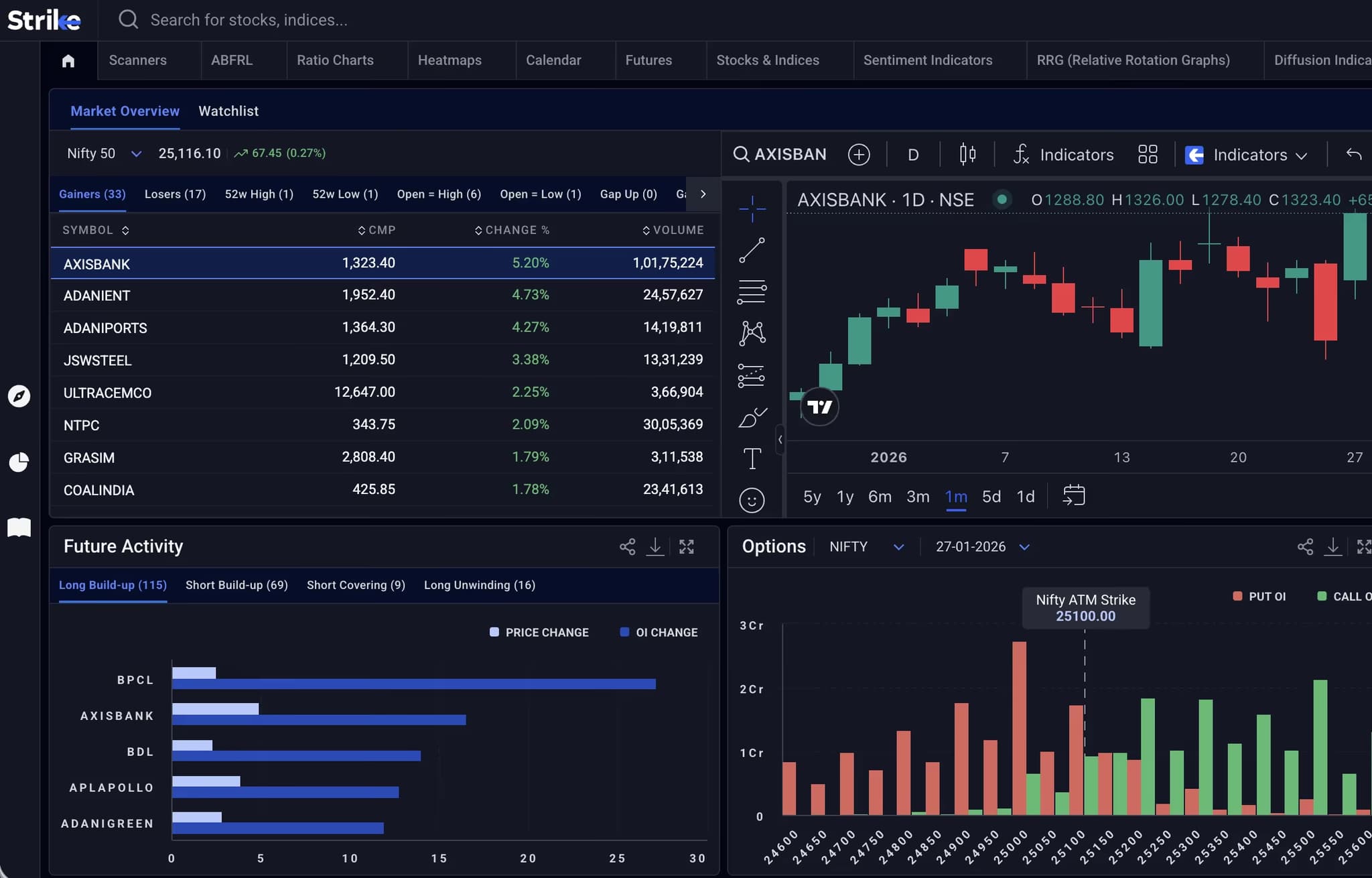
- Real-time market data
- Advanced charting tools
- Institutional-grade analytics
Join thousands of traders worldwide
Join 100,000+ traders receiving our exclusive newsletter with market analysis, trading strategies, and actionable insights.

Weekly Market Analysis
Expert insights on market trends and opportunities
Exclusive Trading Strategies
Proven techniques from professional traders
Free Trading Guide (Worth ₹7,999)
Comprehensive beginner to advanced trading guide
Early Access to New Content
Be the first to read our latest articles

"Strike's newsletter completely transformed my trading approach. The insights are invaluable!"
— Amit Sharma, Active Trader
50K+
Active Traders
$2.5B+
Trading Volume
150+
Markets Covered
24/7
Support Available