Trading Psychology 101: 8 Common Biases, Position Sizing Rules, and How to Recover From a Drawdown


 Author

 Editor
Trading psychology is the most important skill to have for all traders and investors to stay disciplined and consistent in the market. Trading psychology helps you to manage your emotions such as fear, greed, and impatience so that you follow your trading plan consistently.
According to SEBI data, more than 91% of individual traders lost money in the F & O market with a total loss nearing ₹1,05,603 crore. This data clearly shows that trading alone with strategy is not enough. You have to work on psychology along with your trading plan. This blog will help you understand why these mistakes happen, the 8 common psychological traps behind them, and simple ways to overcome them so you can make more disciplined trading decisions.
What Is Trading Psychology?
Trading psychology is a study of how emotions, mental states, and behavioral biases influence your trading decision, and how those decisions affect your profit and loss. Trading psychology covers every psychological behavior, starting from planning a trade to entering, holding and exiting.
Trading psychology is more important than any strategy in order to become a profitable trader, because your strategy tells you what to do, but your psychology decides whether you’ll actually do it.
Evidences That Prove Trading Psychology Plays a Crucial Role
There are several large-scale data that shows trading psychology is not any random opinion, it actually plays a crucial role in trading.
- SEBI Data on F&O Traders: SEBI says most individual F&O traders in India lose money and the losses are widening. The table given below shows the study of SEBI on Indian individual F&O traders across different fiscal years.
| Study / Period | % of Individual F&O Traders Who Lost Money | Average Loss per Losing Trader | Other Key Findings |
| FY22 (SEBI Study, Jan 2023) | 89% | ₹1.1 lakh | First major SEBI study on individual equity F&O traders. |
| FY22–FY24 (SEBI Follow-up Study) | 93% | ~₹2 lakh | Aggregate losses exceeded ₹1.8 lakh crore over three years. |
| FY25 (SEBI Update) | >91% | Not disclosed | Net losses rose 41% YoY to ₹1,05,603 crore. |
By looking at these data one thing is clear, if strategy were the only factor, the results would be more balanced, but the consistently high loss rate suggests that trading psychology plays a major role.
- Traders keep trading after repeated losses: SEBI research also found out that more than 75% of the loss-making traders still continue trading in the F & O market even after consecutive years of losses. This data clearly justify the psychological pattern of sunk-cost thinking, where traders believe that the next trade will make up for the last one.
- Overtrading: Professors Brad Barber and Terrance Odean, studied the individual investor behavior by analyzing more than 66,000 brokerage accounts over a six-year period, found that the household traders who were trading more frequently made around 11.4%, while the overall market returned about 17.9% over the same period. Researchers linked this behavior with overconfidence rather than a pure skill.
By looking at these numbers, one thing is clear, these losses are purely driven by poor trading psychology.
8 Trading Psychology Traps You Should Overcome
There are 8 psychological traps that you should overcome as a trader, especially if you are a beginner. These psychological traps are revenge trading, FOMO chasing, loss aversion, strategy hopping, high-watermark anchoring, extrapolation bias, and analysis paralysis.
1. Revenge Trading
When you take an unplanned trade immediately after a loss to take revenge and win back the money you just lost, that’s revenge trading.
Suppose you lost ₹5000 in a single trade, instead of accepting the loss, you immediately took another trade with the aim to recover your previous loss. Sometimes traders double their quantity after loss to recover the previous loss and make profit on top of that.
Revenge trading happens because loss triggers an emotional response within you, like frustration, embarrassment, or urgency. Once it hits, you just stop evaluating the market and start placing random trades, just to recover loss.
You can overcome this problem by following these three simple points.
- You can set a fixed 15-30 minutes cooling-off period after a loss.
- Decide your maximum daily loss. Once the max loss for the day is reached, stop trading.
- Note or record the points that triggered you to do revenge trading. THis will help you to slow down your emotional reaction.
2.FOMO Chasing
FOMO (Fear Of Missing Out) chasing happens when you get the fear of missing out opportunity in a strong trending market. If the prices of index or stocks are moving fast, you try to enter the trade in fear of missing this golden opportunity, even though it is not your setup.
The cause of FOMO chasing is mainly associated with social comparison and fear of regret. When you see a stock rally 5–10% in a session, or watching trading groups celebrate profits, it creates pressure “don’t miss the move,” even though the trade is not planned.
Follow these three simple steps to overcome the FOMO chasing problem.
- Pre-define your trading setup and only trade when it meets your criteria. If it’s not your trade, don’t trade.
- Track “FOMO trades” separately in your journal and review their win rate. Most traders find this bucket is their worst performer.
- Accept that missing a move costs nothing. Chasing a move and losing costs capital.
3.Loss Aversion
Loss aversion means when you feel more pain on your loss but less pleasured on the same gain. This means you are psychologically weak to see losses in your trade because of which you end up holding losing positions too long in a hope of recovery and close winning positions too early to lock in the gains before it turns into loss.
This psychological behavior is well explained by psychologists Daniel Kahneman and Amos Tversky in their “prospect theory”. They say that people compare their money with what they expected or what they started with.
Let me explain it to you using an example. Suppose you buy a stock at ₹1,000.
- If it rises to ₹1,100, you may quickly sell because you don’t want to lose that ₹100 profit.
- If it falls to ₹900, you may keep holding because you don’t want to accept the ₹100 loss.
Here, for you the ₹100 loss feels worse than the ₹100 profit, and that’s exactly what a loss aversion is. To overcome this psychological problem, follow these three simple steps given below.
- Decide your target and stop-loss before you enter the trade and strictly follow it. Take either target or stop-loss.
- Start treating stop-loss as a cost of doing business instead of taking it as a personal loss. This will help you in accepting losses.
- Review all your trades to see whether losers were held longer than winners.
4.Strategy Hopping
Strategy hopping means when you keep switching on different strategies, indicators, or “system” just because the previous strategy gave you a losing streak.
This usually happens when your strategy faces a losing streak, or you get influenced by social media showing better strategy. However, the important point is, every valid strategy has a losing streak and performs differently in different market conditions.
You can not judge a strategy based on 3-4 consecutive losses. To overcome this problem, follow the three simple steps mentioned below.
- Backtest a strategy before adopting it live.
- Define a minimum sample size (a set number of trades) before judging performance.
- Track performance over a meaningful number of trades (at least on 100-150 trades) , not just the last few.
5.High-Watermark Anchoring
High-watermark anchoring happens when you start comparing or judging your current portfolio or trade performance against the highest profit point it previously reached, meaning once your account reaches a new profit level, you start considering that as new reference point. Any drop from that peak feels like a loss, even if the position or account is still profitable overall.
Let me explain with an example. Suppose your trading position is showing a profit of ₹20,000 at one point. By the time market closed your profit dropped to ₹8000. Now you will feel like you have “lost Rs 12,000,” even though they are still up Rs 8,000 from the entry price.
To overcome high-watermark anchoring, follow the three given simple steps.
- Compare your gains and losses based on current capital, not the previous peak
- Set risk limits based on your present account size
- Keep a clear distinction in mind, a realized loss is money actually lost from your original capital, while giving back unrealized profit is a psychological loss, not a real one.
6.Extrapolation Bias
In extrapolation bias, you assume that a recent trend will continue simply because it has continued so far.
This happens because human brains are designed to identify repeating patterns and project it forward, expecting the same outcome. Once you get five wins in a row, you expect the next traders to also be successful. During such scenarios you might also increase the quantity. When the streak ends, the losses are proportionally larger because the position sizes were larger.
You can overcome the extrapolation bias by following four simple pints.
- Keep position sizing rule-based and mechanical.
- Evaluate performance using larger datasets, not the last few trades
- Look at how a strategy performs across multiple different market conditions
- Avoid making decisions based on a small sample size
7.Outcome Bias
Outcome bias happens when you start judging your strategy based on outcomes instead of trading rules. If you have made a consistent profit for a week without following any proper trade setup, you start to reinforce bad habits (because they got lucky and won) and abandon good habits (because a sound trade lost money).
Suppose you took a breakout trade, but stock reversed and hit your stoploss. As a beginner you will abandon the strategy. Suppose In the same scenario, instead of booking stop-loss you waited for price to move in your favour again, and you got lucky on that. You will think you have made a smart trading decision just because you got lucky and the outcome came in your favour.
You can overcome the outcome bias by following the three simple steps mentioned below.
- Grade each trade on process, not outcome: Did you follow your entry rules? Did you size it correctly? Did you respect the stop-loss? A trade can score well in the process and still lose money.
- Keep a “process score” column in your trading journal, separate from the profit/loss column.
- Review strategies over a large sample of trades, not individual results, before deciding whether they work.
8.Analysis Paralysis
Analysis paralysis means doing too much analysis where one analysis view contradicts another analysis view and it becomes difficult for you to take judgement and execute the trade. Analysis paralysis often makes traders miss the entry entirely or enter late at a worse price.
Analysis paralysis often happens with traders who have made losses from impulsive decisions. Such traders try to avoid losses by over correcting their strategy and adding too much confirmation criteria.
You can overcome the analysis paralysis by following the three simple points mentioned below.
- Limit your analysis criteria within 2-3 clear factors or predefined conditions. If a trade meets them, take it; if it doesn’t, skip it.
- Set a decision deadline, means if a setup isn’t confirmed within a fixed number of candles, consider the opportunity is over.
- Practice smaller position sizes while building confidence in a new strategy, so the fear of “getting it wrong” carries lower stakes.
Trading Quotes to Help Your Trading Psychology
The four trading related quotes by world famous traders and investors that hold heavy psychological impact.
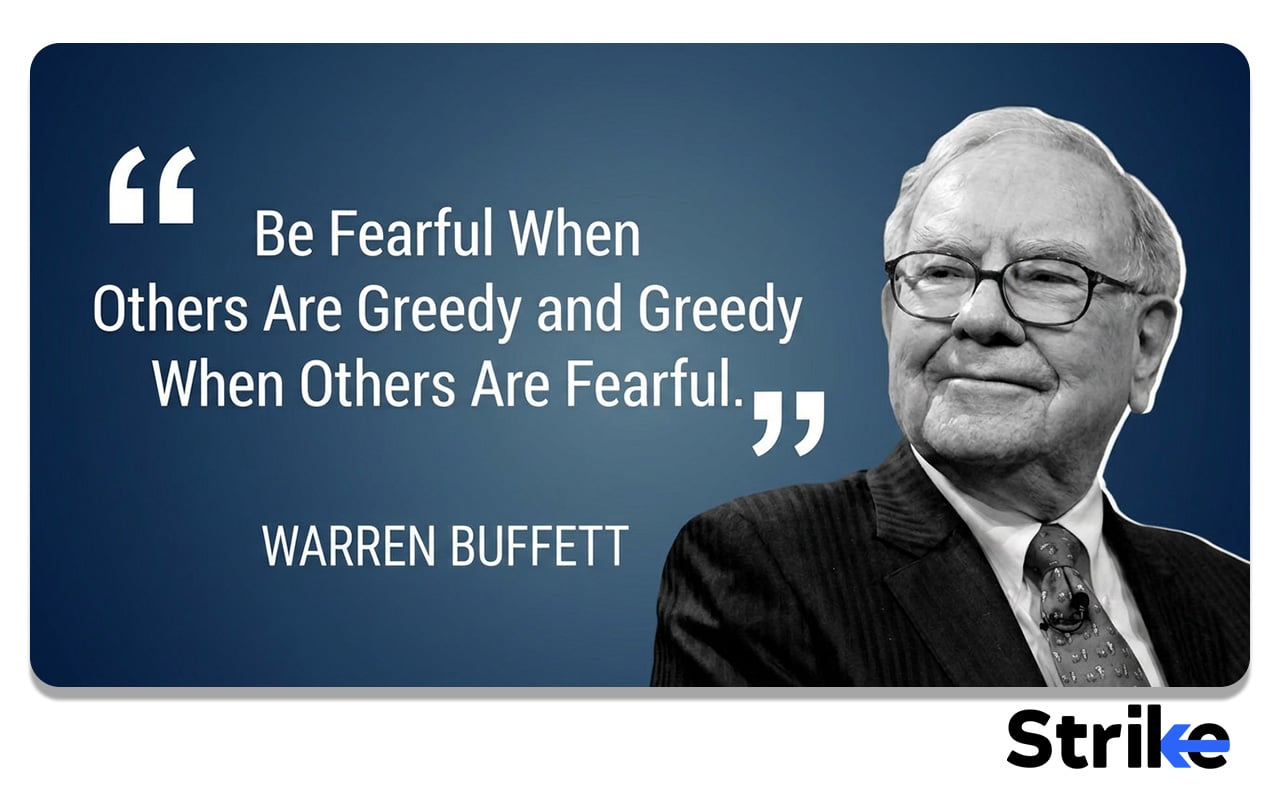
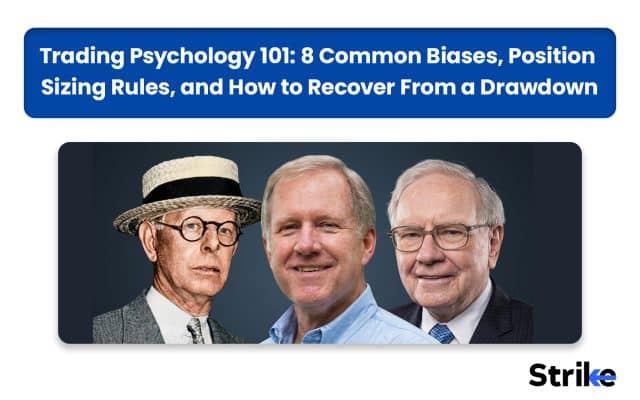
- “Be fearful when others are greedy, and greedy when others are fearful.” by Warren Buffett. This quote is a direct solution for FOMO chasing. Don’t just buy in FOMO just because everyone is buying, because that exactly is a psychological trap.
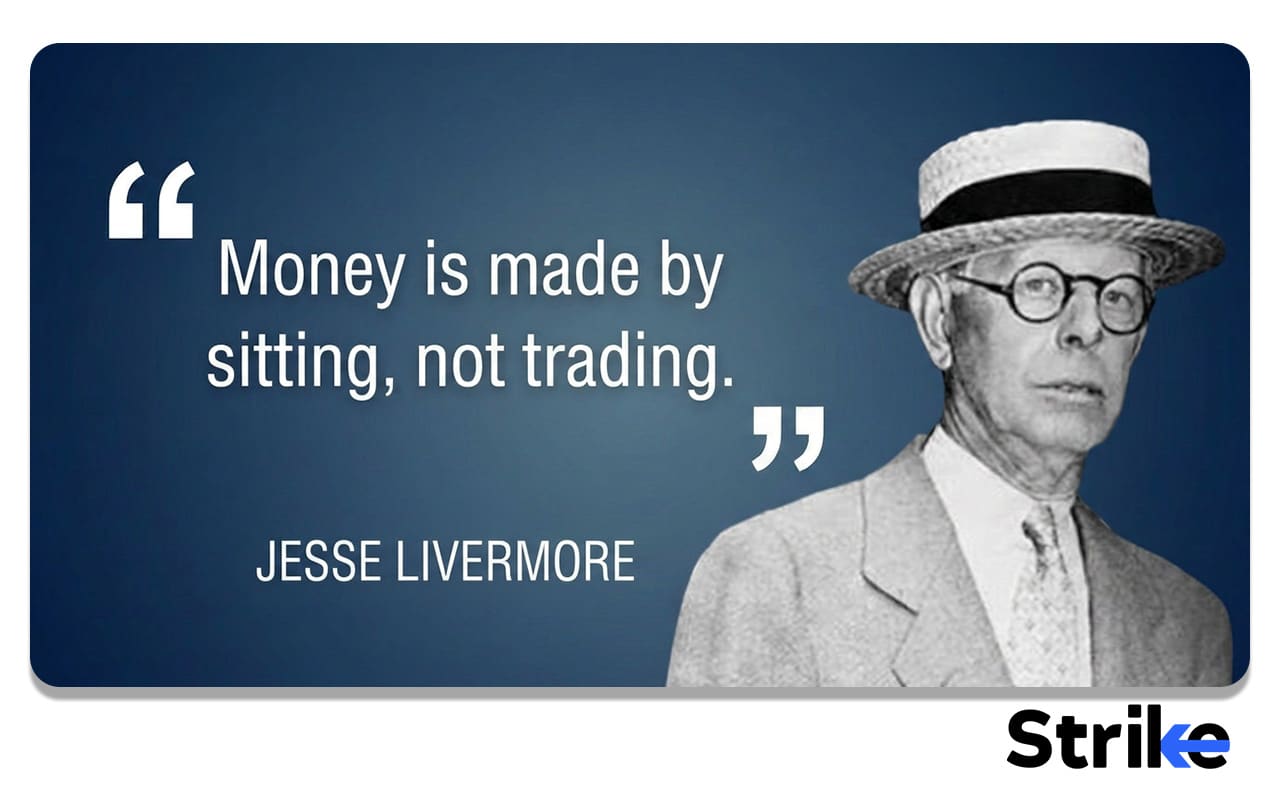
- “Money is made by sitting, not trading.” by Jesse Livermore. This is actually a harder thing to do as a trader. Once you take a trade, stay still and let the trade run until it hits your profit or a target. This quote is very useful for the loss aversion problem.
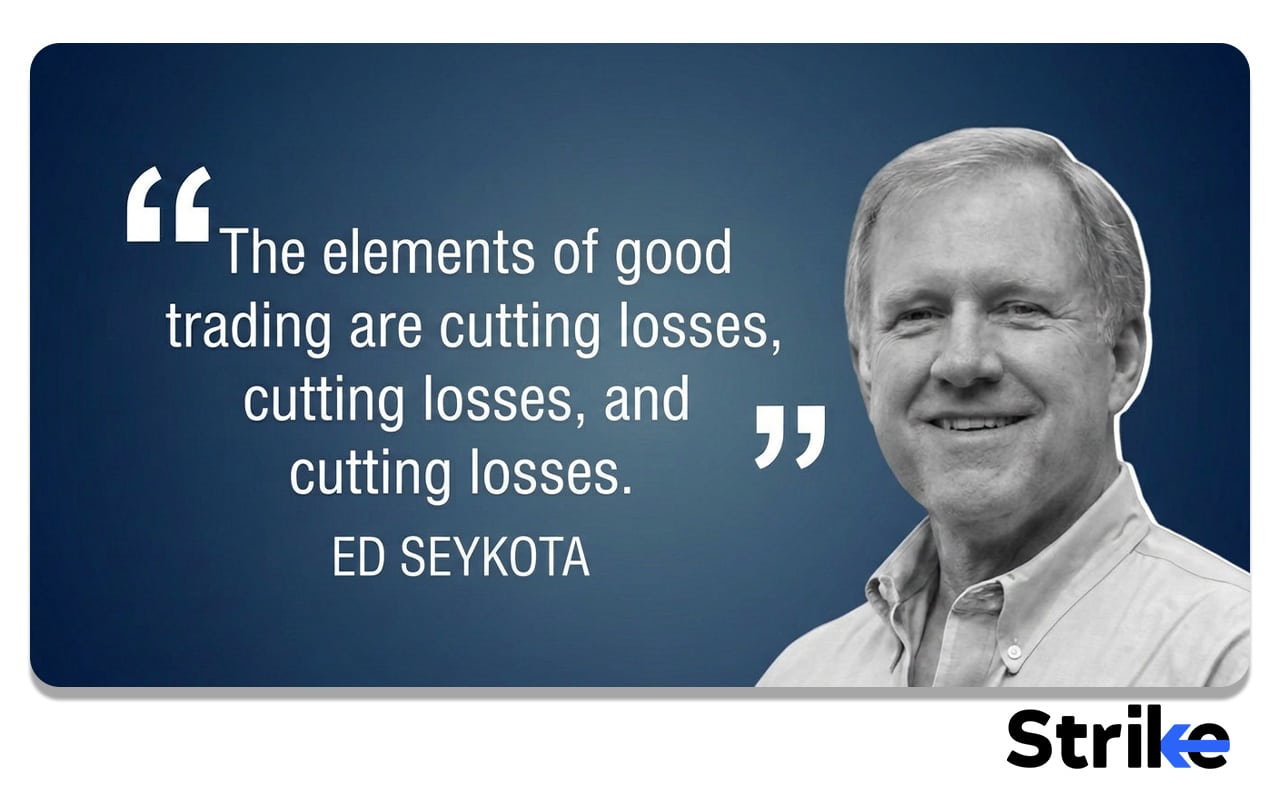
- “The elements of good trading are cutting losses, cutting losses, and cutting losses.” by Ed Seykota. This quote directly connects with loss aversion and revenge trading. Don’t just hold your losing position hoping for a recovery.
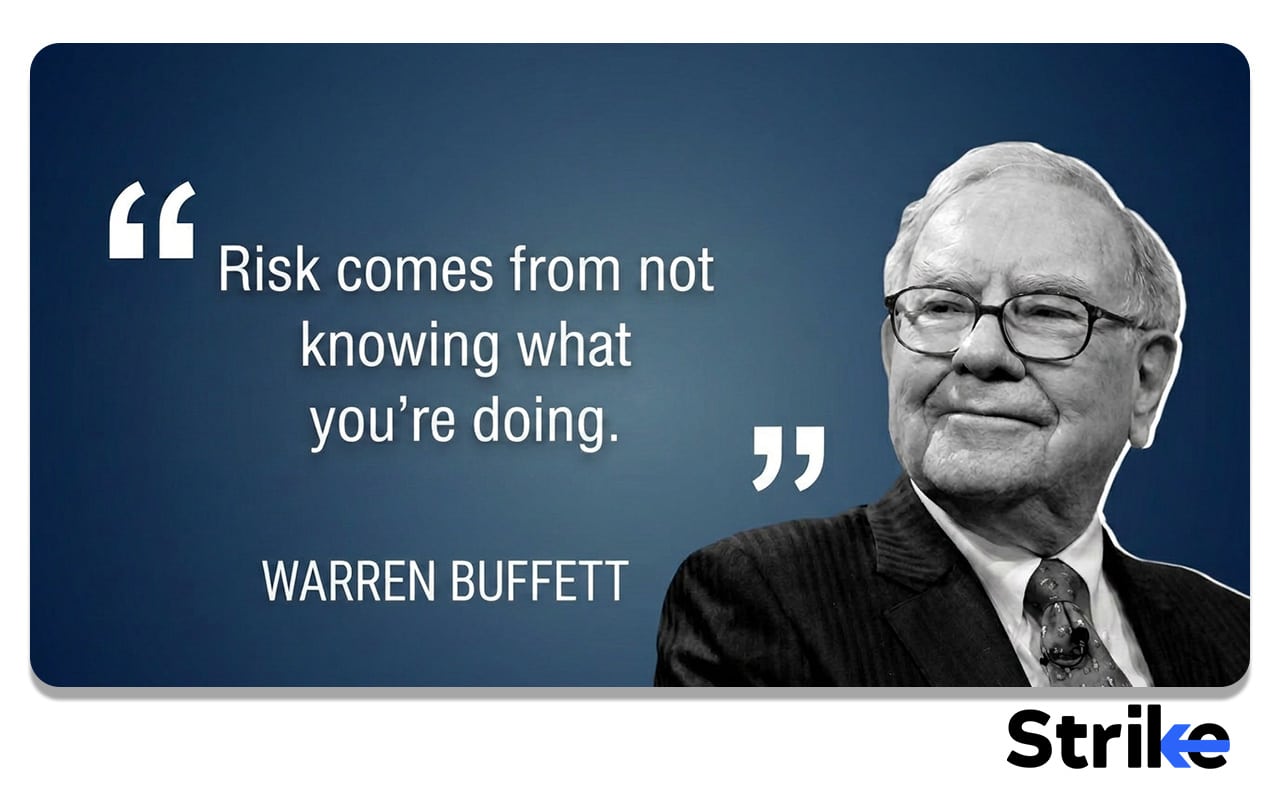
- “Risk comes from not knowing what you’re doing.” Warren Buffett. This quote highlights the importance of clarity in your trading. Don’t take trades based on someone’s recommendation, you won’t know how to manage the trade when it moves against you.
Use these as reminders, not rules — the real discipline comes from your own written trading plan, not from a quote on a wall.
Books We Recommend You to Read on Trading Psychology
The list of best books to train your psychology is given in the table below.
| Book | Author | Best For |
| Trading in the Zone | Mark Douglas | Understanding why discipline, not analysis, drives long-term results |
| The Disciplined Trader | Mark Douglas | Building the mental framework to accept risk before entering a trade |
| Thinking, Fast and Slow | Daniel Kahneman | Understanding the cognitive biases (loss aversion, overconfidence) behind trading mistakes |
| The Psychology of Trading | Brett N. Steenbarger | Practical, therapy-informed techniques for self-assessment and behavior change |
| Market Wizards | Jack D. Schwager | Seeing how top traders across different styles handle risk and losing streaks |
I personally started with Trading In the Zone by Mark Douglas. What stood out to me was its focus on accepting uncertainty and thinking in probabilities rather than expecting every trade to work. That mindset is especially important for traders who struggle to accept losses.
Which Behavioral Biases Actually Change What You Do?
The four biases that have the biggest impact on trading decisions are loss aversion, overconfidence, recency bias, confirmation bias.
- Loss Aversion: Loss aversion makes traders hold their losing position for too long, while booking profits too early to avoid the emotional discomfort of seeing a trade move against them.
- Overconfidence: Overconfidence makes traders feel that their analysis is very accurate that it actually is. Such overconfidence often leads to larger position sizes, excessive trading, and ignoring risk management rules.
- Recency Bias: Recency bias when traders make decisions based on recent outcomes. For instance, a trader gets overly aggressive and increases his risk after a good winning streak. Whereas, after a losing streak, they hesitate to follow their decided plan or abandon a strategy fully.
- Confirmation Bias: When a trader looks for information to validate or supports his view while ignoring the evidence that contradicts it. This usually results in holding weak trades, delaying exits, or becoming emotionally attached to a market opinion.
These are the common threads that directly influence the decisions that determine trading performance, but the loss aversion is the most important one. Every beginner entering the market will face loss aversion problems first, rest problems come later.
Why Do Losses Hurt More Than Gains Feel Good?
Losses hurt more than equivalent gains feel good because of loss aversion psychological behaviour, a core finding of prospect theory, the behavioral economics framework developed by Daniel Kahneman and Amos Tversky in the late 1970s.
Prospect theory found that people evaluate their outcomes based on their starting points rather than looking at absolute return and feel more pain on their loss compared to the same amount of gain, meaning losing Rs 10,000 feels considerably worse than the satisfaction of gaining Rs 10,000, even though the amounts are mathematically different.
Why Do You Sell Winners and Hold Losers?
You sell winners early and hold losers too long because of the “disposition” psychological effect. Dispositional effect is a well documented behavioural finance pattern where you book your profit early to feel good about locking in profit, but while selling a loser trade feels bad because you have to accept that your decision was wrong.
You can fix this psychological problem by following these two simple steps.
- Decide your stop-loss and target before you enter the trade and accordingly plan your position size. It is better if you place GTT or basket order for predefined stop-loss and target, so that it will keep your emotions out.
- Track your average holding time for winning trades versus losing trades. If losers are held significantly longer than winners, the disposition effect is active in your trading.
Terrance Odean (1998) studied trading records from 10,000 individual brokerage accounts and published the data in a journal of THE AMERICAN FINANCE ASSOCIATE showing that 14.8% traders exited their winning position but only 9.8% of traders exited their losing position. This means more than 50% are likely to sell a winning stock rather than a losing stock.
Why Does Trading More Make You Poorer?
Trading more will make you poorer because the more you trade, the more trading cost you pay to the broker. A study by finance professors Brad Barber and Terrance Odean on more than 66,000 brokerage households found that most traders who traded frequently earned an average annual return of about 11.4%. Whereas, the broader market over the same period gave a 17.9%.
SEBI study on individual F&O traders from FY22–FY24 found that loss making traders paid around 27% of their gross loss as a transaction cost, whereas profitable traders paid around 22% of their profit as transaction cost.
Is It Psychology, or Is Your Edge Just Negative?
Psychology is not always the problem, sometimes it’s your trading strategy. Before blaming psychology for consistent loss, you must check whether your strategy itself has a negative statistical edge.
But how would you know your strategy has a negative edge? Simply separate the analysis into two questions.
- Process question: Did I follow my entry rules, position sizing rules, and stop-loss/target rules on this trade?
- Outcome question: Did the trade make or lose money?
You can interpret the answer of these questions in four different ways to conclude what is going wrong trading.
| Followed Process | Won | Meaning |
| Yes | Yes | Good process, good outcome, strategy may have edge |
| Yes | No | Good process, bad outcome, normal variance, not a psychology problem |
| No | Yes | Bad process, good outcome, lucky, but a dangerous habit if repeated |
| No | No | Bad process, bad outcome, a psychology/discipline problem |
Backtest or paper trade at least 50–100 trades based on your strategy. If the result comes negative even after following the proper rules, your strategy has a negative edge.
Why Is Position Sizing a Psychology Problem?
Position sizing directly controls your emotions. The larger the position, the harder it is to calmly follow your trading plan.
For instance, a trader with a 0.5% risk on his capital will calmly follow his trading plan and can accept a stop-loss without any hesitation. Whereas. a trader with oversized positions (10% – 15% risk on his capital) will find it nearly impossible to follow his trading plan calmly, because of fear, hope, or panic. This usually leads to shifting of stop-loss, early exiting, or averaging down.
Following are three important position sizing rules a professional trades use to stay emotionally balanced.
- Fixed Fractional Risk: Risk only a fixed percentage of total capital, typically 0.5% – 2%, on every single trade.
- Volatility Based Position Sizing: Take positions based on asset volatility. Use ATR (Average True Range) to take positions so that volatile stock gets a smaller position.
- Correlation-adjusted sizing: Reduce your total position size when you have multiple trades in the same sector or in stocks that usually move together. They can all fall at the same time and increase your losses.
Why this solves a psychology problem, not just a math problem: When position size is calculated mechanically from a fixed risk percentage, the emotional temptation to “size up” on a favorite setup or “size down” out of fear is removed from the decision. The position size becomes a formula, not a feeling — which is exactly why professional trading desks enforce sizing rules as strictly as entry and exit rules.
What Does a Disciplined Trading Process Look Like?
There are five core components that make your trading process a disciplined trading process.
- A written trading plan: You have your entry, exit, stop-loss, and target conditions planned in advance. It can be either based on price action, volume, indicators, or other signals.
- Pre-calculated position sizing: You know how much to trade based on how much you are willing to lose on the trade, not on how confident you feel at the moment.
- Stop-loss and target set at entry: You decide your target and stop-loss before you enter the trade and follow them systematically without any excuse.
- A maximum daily or weekly loss limit: You have your maximum loss limit decided before entering the trade.
- A trade journal: You record your setup, position size, entry, exit, reasoning, and result to identify repeated mistakes and patterns.
A disciplined trading process does not guarantee that every trade will be profitable, but it ensures that every decision follows a system.
How Do You Recover From a Drawdown Without Making It Worse?
There are six important steps to recover from a drawdown without making it worse. These steps are briefly discussed below. But before we continue with the steps, I want to show you some simple math on how much gain is required to recover losses.
| Drawdown (Loss) | Gain Required to Recover |
| 10% | 11.1% |
| 20% | 25% |
| 30% | 42.9% |
| 40% | 66.7% |
| 50% | 100% |
| 60% | 150% |
| 70% | 233% |
The deeper the drawdown, the harder recovery becomes, which is exactly why the response to a drawdown should be to reduce risk, not increase it.
Lets now discuss the six major steps to recover from your drawdown without making it worse.
- Stop trading and assess, before trading again: Identify the cause of drawdown, whether it was revenge trading, oversized positions, ignored stop-losses, or a genuinely negative-edge strategy.
- Return to your tested strategy: Check whether your strategy actually lost its edge or is it still valid, instead of switching it.
- Cut position size significantly when resuming trading again, reduce your usual position sizing by 50% or more until you recover at least 75% of your loss.
- Reduce the number of trades focusing only on the highest-conviction setups, rather than trying to generate the same trade frequency as before the drawdown.
- Set a strict daily/weekly loss limit: Set a limit to how much you can lose in a day and week. This limit should be lower than the limit used before the drawdown.
- Track the process closely: Track the processes to understand that the process is being followed trade by trade. The goal of the recovery phase is not to make back the lost money quickly.
Remember, the deeper the drawdown, the more dangerous the urge to recover quickly becomes. During such a phase, stay calm and follow the above mentioned steps to stop your drawdowns from getting deeper and recover the loss gradually.
What Makes Indian Retail Traders Especially Vulnerable?
Easy access to trading and leveraged products is making Indian retail traders vulnerable.
Indian retail traders face a specific combination of easy access to leveraged products, a young and rapidly growing trader base, and social-media-driven trading culture — a mix that SEBI’s own research has flagged as a growing concern.
Key vulnerability factors, based on SEBI’s research:
- Rapid growth in options trading volume: During FY22–FY24, SEBI reported an increase in options trading volume from ₹10.8 trillion in FY20 to about ₹138 trillion in FY24. This data shows that the trading activity has grown much faster than many traders’ understanding about risk.
- A young, inexperienced trader base: According to SEBI, the number of traders below the age of 30 has grown from 31% in FY23 to about 43% in FY24. This means new participants have never traded through a prolonged bear market.
- Persistence despite losses: More than 75% of loss-making individual traders continued trading in the F&O segment despite consecutive years of losses. SEBI research identifies this pattern as sunk-cost thinking where traders believe that better luck (or a better tip) is just around the corner.
- Low entry barriers to high-risk products: You relatively need a small premium outlay to take large notional exposure.
- Social and content-driven trading decisions: With the rise of trading-focused social media, beginners are making trading decisions based on others’ tips and screenshots of profitable trades instead of following a tested trading plan.
Looking at this vulnerability among Indian retail traders, SEBI stepped in to reduce speculative, high-frequency retail participation in derivatives by setting the new rules like increasing lots in option contract from 25 to 75, one weekly expiry per exchange and mandating additional risk disclosures from brokers.
This resulted in the fall of unique F&O traders from 61.4 lakh to 42.7 lakh across FY25. However, 91% of traders were still losing money.
When Does Trading Become a Gambling Problem?
Trading becomes a gambling problem as soon as you start making decisions primarily on your emotions. Once an emotional decision kicks in, you start chasing losses, trading for excitement rather than analysis, or continuing despite clear financial and personal harm.
There are 6 warning signs that your trading may be moving from normal speculation toward problem gambling.
- Trading with money needed for essential expenses like rent, bill, loan payments, etc rather than dedicated risk capital.
- Increasing your trading quantity to chase losses, even though your setup does not justify the large size.
- Unable to stop trading even after the daily loss limit is being hit.
- Hiding or lying about your trading activities with your family or friends.
- Borrowing money to fund your trading account, especially after losses.
- Trading primarily for the emotional rush of placing a trade, rather than because a genuine setup is present.
If several of these signs sound familiar, don’t try to solve the problem by simply increasing discipline or taking bigger trades to recover losses. Consider stepping away from trading and speaking with a qualified mental-health professional or an appropriate gambling-support service. Asking for help early can prevent financial losses from becoming a larger personal or financial problem.
 5 mins