


 Editor
  Updated on 5 September 2025
The best option trading platform in India in 2025 is Strike Money for analysis, while Zerodha Kite and Angel One lead in reliability and user base. Strike Money stands out because of its in-depth analytics, strategy builder, payoff charts, and backtesting tools. Zerodha remains strong for execution speed, while Angel One and FYERS appeal to retail investors with advanced charting and simple interfaces.
Options trading apps have grown rapidly in India, with millions of traders joining daily. A report by NSE states that over 70% of the daily market volume comes from options, highlighting the importance of powerful platforms. The choice of app depends on brokerage charges, analysis tools, speed, UI/UX, and customer support.
1. Strike Money
Strike Money is the best option trading platform in India for analytics and strategy building, with over 1 million active users. The app has become a favorite for traders who focus on data-driven decisions.
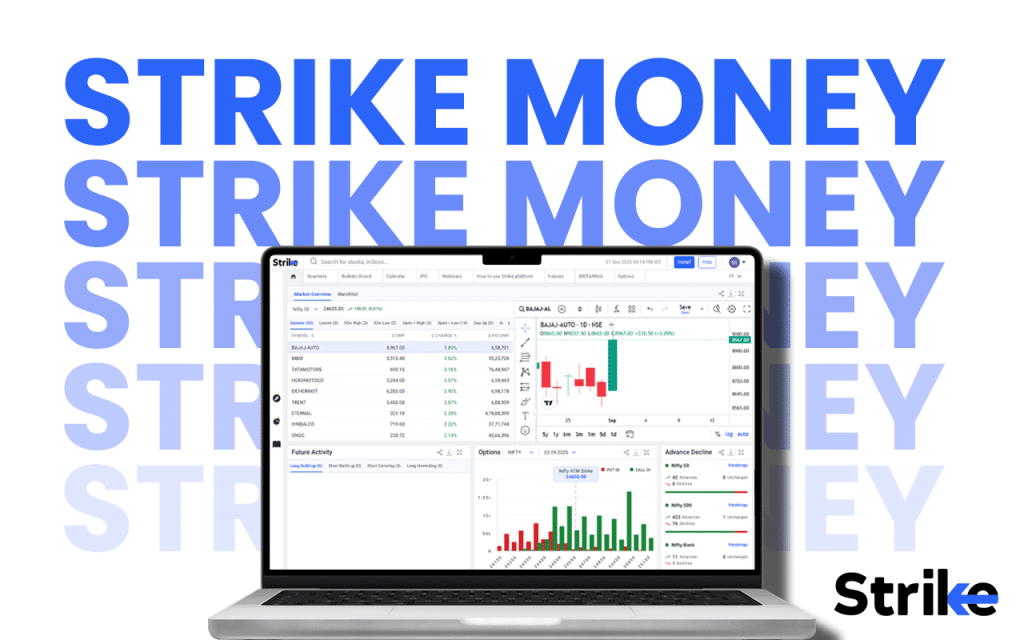
The dashboard is visually rich, offering real-time option chain data, IV charts, and payoff graphs. It integrates Greeks, backtesting, and simulations better than most rivals.
USP: Deep analysis with live data and advanced tools.
Charges
Starts from ₹650 per month
UI/UX: Intuitive, clean, and optimized for both mobile and desktop.
Speed & Reliability: Servers handle high loads well, ensuring no lag during market peaks.
Features:
- Real-time Option Chain with filters
- Strategy Builder (multi-leg trades)
- Payoff Visualization with dynamic graphs
- Backtesting and Simulation
- Greeks (Delta, Gamma, Theta, Vega, Rho)
- Data-driven heatmaps and alerts
- Interactive charting
Customer Support & Community: Active Telegram and Discord groups, 24×7 support through chat and mail.
Strike Money is ideal for traders who prioritize analysis over plain execution. Its ecosystem helps even advanced traders refine strategies with precision.
2. Angel One
Angel One is a popular full-service broker app in India with over 14 million registered clients. It is widely trusted due to its legacy presence and integrated services.
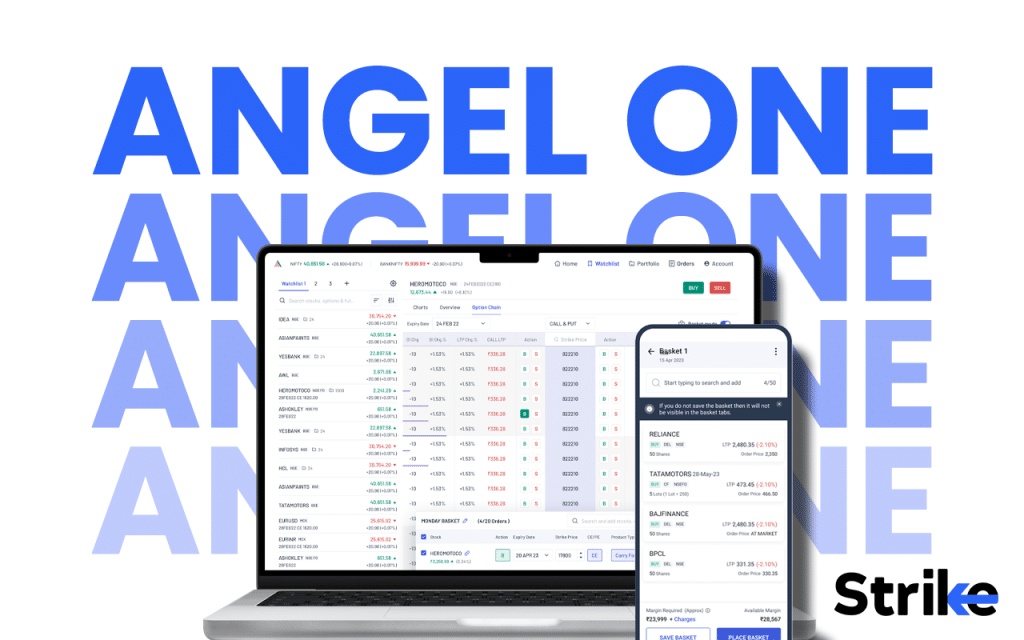
The app offers both stockbroking and advanced options analytics. Its USP is the balance between traditional brokerage services and a modern discount model.
Brokerage: Rs. 20 per executed order.
Charges:
- AMC: Rs. 240 yearly for Demat
- Margin: Limited intraday leverage
- Other charges: Standard exchange fees
UI/UX: Smooth design with advanced charting from TradingView integration.
Speed & Reliability: Highly stable during peak hours with strong backend.
Features:
- Options Chain with IV, OI, and Greeks
- Built-in Strategy Builder
- Charting powered by TradingView
- One-click basket orders
- IPOs, MFs, F&O all in one app
Customer Support: Toll-free number, live chat, and RM support for premium clients.
Pros vs Cons
| Pros | Cons |
| Full-service research + discount pricing | AMC charges apply |
| Reliable execution speed | App updates sometimes slow |
| Wide range of products | Customer support response delays reported |
Angel One is best for traders who want research-backed trading plus options features in a single app.
3. FYERS
FYERS is best known for its clean UI and detailed charting experience. It has gained a strong reputation among options traders who rely on technical analysis.
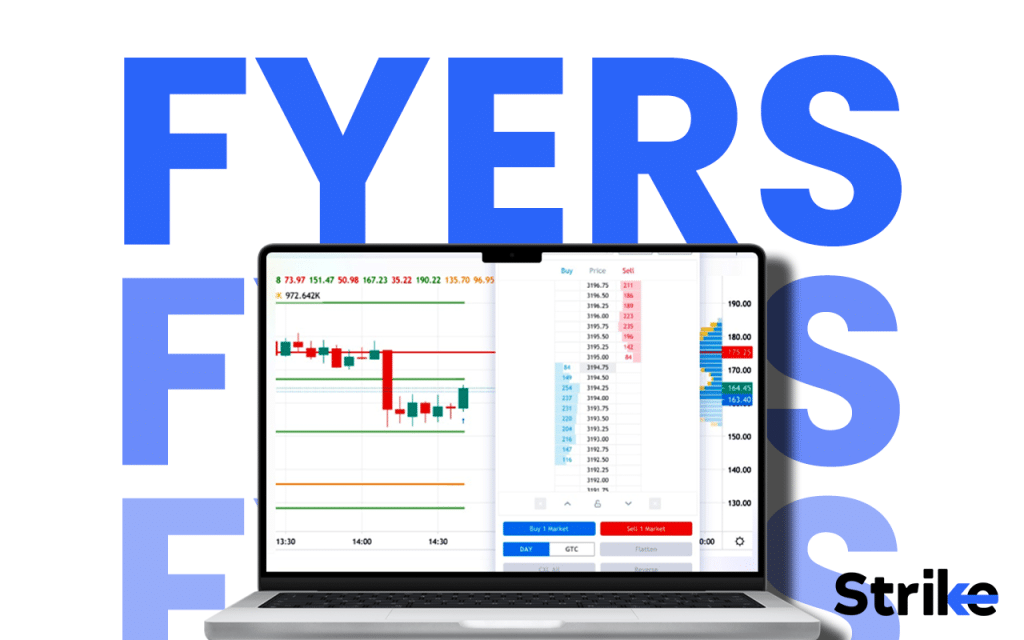
USP: Advanced charting with 25+ years of historical data.
Brokerage: Rs. 20 per order.
Charges:
- AMC: Zero
- Margin: Complies with SEBI
- Others: Exchange + SEBI fees
UI/UX: Cleanest among brokers, comparable to TradingView.
Speed & Reliability: Highly responsive, excellent for active traders.
Features:
- Advanced Option Chain
- Strategy Builder and Basket Orders
- TradingView-powered charting
- Heatmaps and indicators
- APIs for algo traders
Customer Support: 24/5 phone and email support, good resolution time.
Pros vs Cons
| Pros | Cons |
| Best-in-class charting tools | Lacks large offline presence |
| No AMC charges | Limited mutual fund options |
| API access for automation | Customer support sometimes slower |
FYERS is best for chart-focused traders who want a minimalistic yet powerful platform.
4. Zerodha Kite – Trade & Invest
Zerodha Kite remains India’s most trusted discount broker platform with over 12 million users. It has consistently led in execution speed and low brokerage.
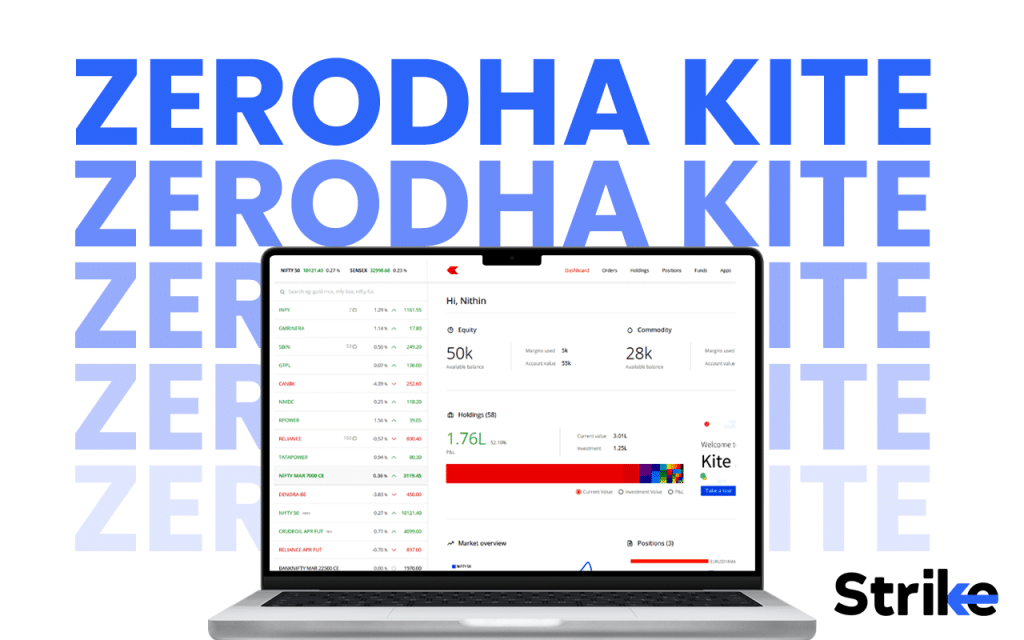
USP: Lightning-fast execution with lowest downtime.
Brokerage: Rs. 20 per order or 0.03% whichever is lower.
Charges:
- AMC: Rs. 300 yearly
- Margin: As per SEBI
- Others: Standard charges
UI/UX: Simple, lightweight, and extremely stable.
Speed & Reliability: Market leader in uptime and order execution speed.
Features:
- Option Chain with IV and OI
- Basket orders
- GTT orders
- Integration with Sensibull for strategy building
- Charting powered by ChartIQ and TradingView
Customer Support: Ticket-based support, resolution usually within 24 hrs.
Pros vs Cons
| Pros | Cons |
| Lowest brokerage, highly reliable | Limited in-house analytics |
| Clean and fast interface | AMC applies |
| Integration with third-party tools | No dedicated community features |
Zerodha is ideal for traders who want fast execution with minimal frills.
5. 5paisa
5paisa is among India’s cheapest brokers with flat Rs. 10 brokerage. It is attractive for high-volume options traders.
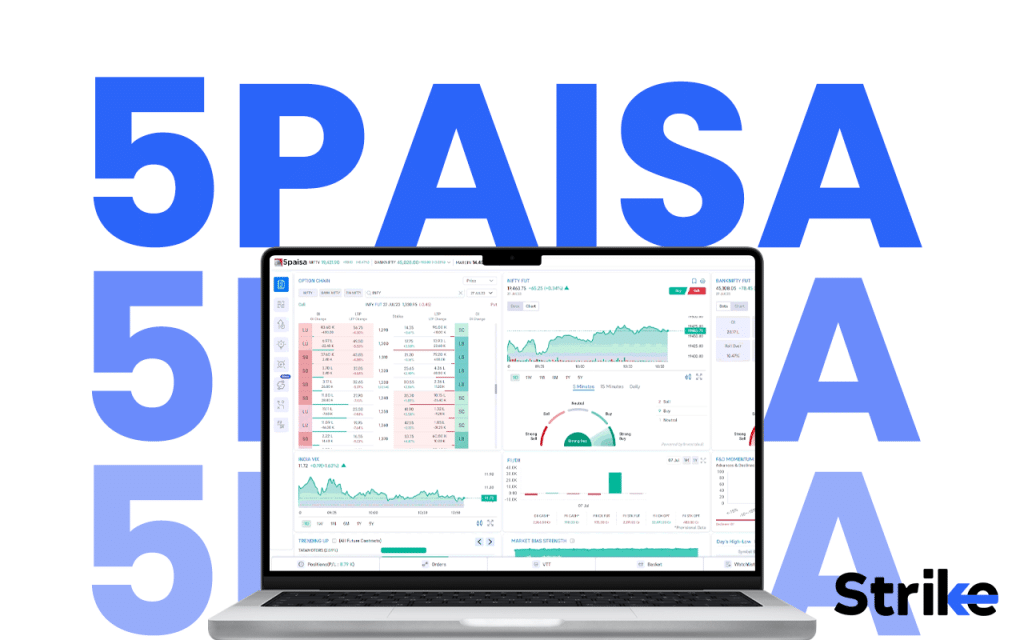
USP: Lowest cost per order.
Brokerage: Rs. 10 per order.
Charges:
- AMC: Rs. 300 yearly
- Margin: Standard SEBI rules
UI/UX: Decent, but not as smooth as Kite or FYERS.
Speed & Reliability: Reliable but faces occasional lags.
Features:
- Options Chain
- Strategy Builder
- Research-backed recommendations
- Auto Investor for MF + stock portfolio
- APIs available
Customer Support: Mixed reviews, email support often delayed.
Pros vs Cons
| Pros | Cons |
| Cheapest brokerage | UI less modern |
| Decent features | Customer support weak |
| Good for volume traders | Reliability issues during peaks |
5paisa is good for cost-conscious traders.
6. Upstox
Upstox is a popular discount broker with over 8 million users, backed by Ratan Tata. It balances affordability with features.
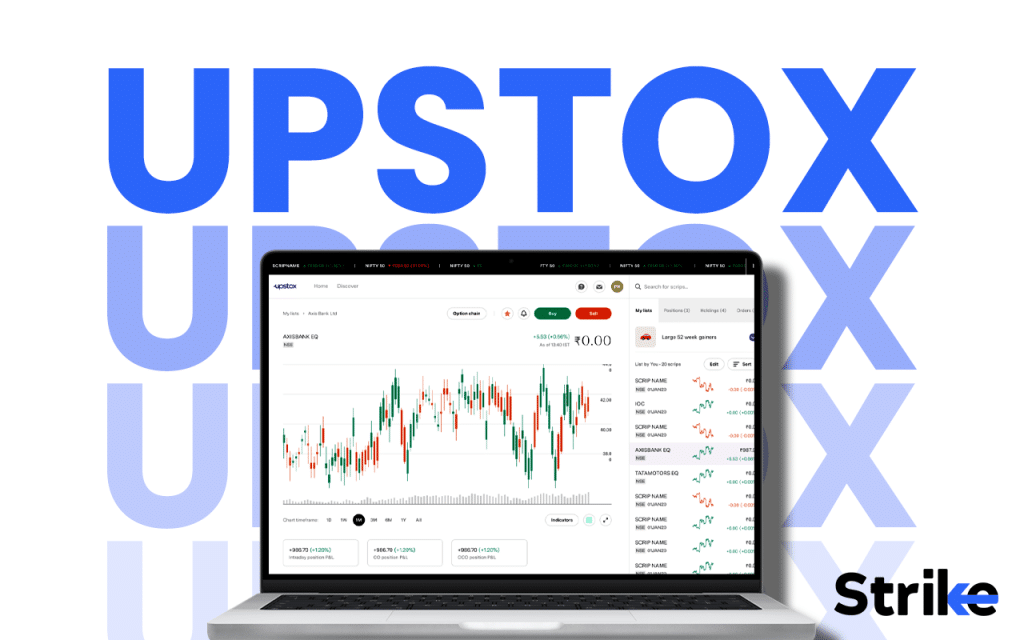
USP: Low brokerage and solid interface.
Brokerage: Rs. 20 per order.
Charges:
- AMC: Rs. 300 yearly
- Margin: As per SEBI
UI/UX: Attractive design, fast navigation.
Speed & Reliability: Stable, widely trusted.
Features:
- Options Chain with filters
- Strategy Builder
- 100+ indicators
- Basket orders
- IPOs and MFs integrated
Customer Support: Fair, response time moderate.
Pros vs Cons:
| Pros | Cons |
| Backed by strong brand | AMC applies |
| Good app interface | Support delays reported |
| Affordable brokerage | Lacks advanced analytics |
Upstox is suited for beginners and intermediate traders.
7. Paytm Money
Paytm Money is one of the most beginner-friendly trading apps in India with more than 5 million users. It benefits from its integration with the Paytm ecosystem, attracting young investors and new traders who prefer simplicity over complexity.
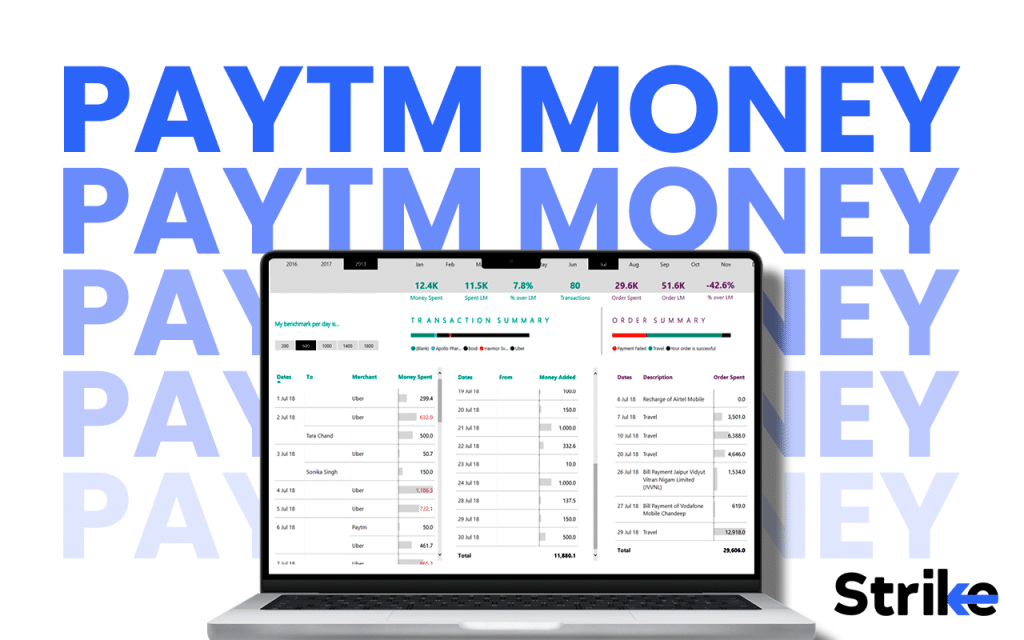
USP: Easy-to-use interface with seamless Paytm wallet integration.
Brokerage: Rs. 15 per executed order.
Charges:
- AMC: Zero
- Margin: Limited, strictly as per SEBI rules
- Other charges: Standard exchange and statutory fees
UI/UX: Paytm Money uses the same design language as the Paytm app, which makes navigation effortless for new traders. The interface is simple and avoids clutter, making it ideal for someone starting with options.
Speed & Reliability: Execution is reliable but not as fast as Zerodha or Strike. During volatile sessions, minor delays have been reported by users.
Features:
- Options Chain with basic filters
- Simplified strategy builder
- IPOs, direct mutual funds, and NPS integration
- Direct Paytm wallet link for faster funding
- Beginner-friendly dashboards
Customer Support: Support is provided mostly via in-app chat and email. Reviews suggest resolution takes longer compared to other brokers, especially during market hours.
Pros vs Cons:
| Pros | Cons |
| No AMC and affordable brokerage | Lacks advanced options analytics |
| Easy onboarding for Paytm users | Execution speed lower than top brokers |
| Wide product integration (MF, NPS, IPOs) | Weak customer support |
Paytm Money is best for new retail traders who want an easy entry into options trading, though advanced traders will find its analytics limited.
8. Alice Blue Trade App
Alice Blue is a low-cost discount broker with strong adoption in smaller cities and towns. It has built a loyal customer base by offering affordable brokerage and regional presence.
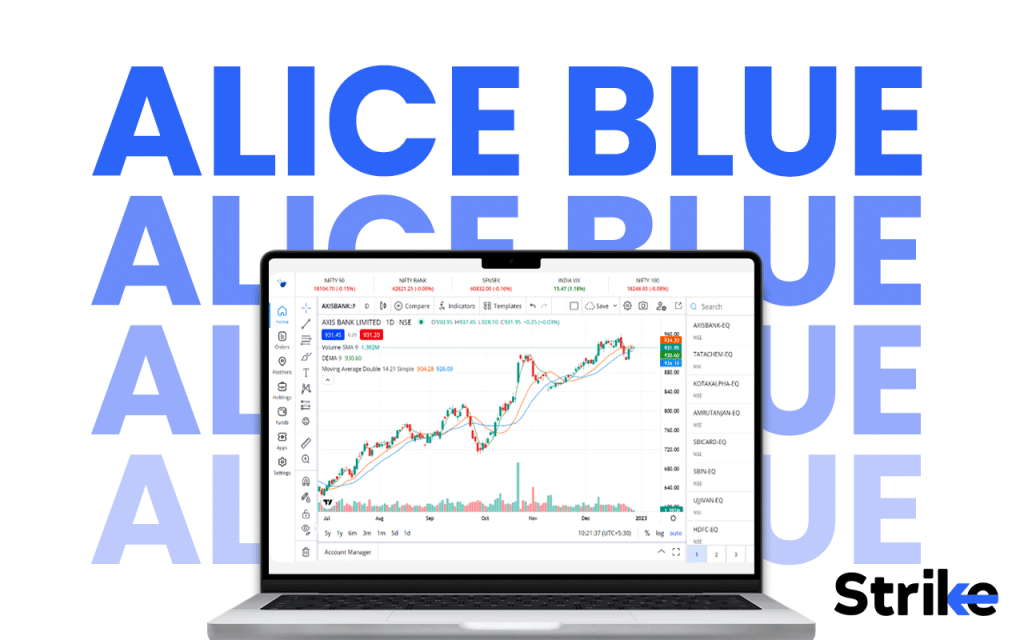
USP: Rs. 15 flat brokerage per order, cheaper than most big names.
Brokerage: Rs. 15 per executed order.
Charges:
- AMC: Rs. 400 yearly
- Margin: As per SEBI rules
- Other charges: Exchange + SEBI standard
UI/UX: The design is functional but less modern compared to Upstox or Dhan. Navigation is straightforward but lacks the polish of top brokers.
Speed & Reliability: Performance is stable for most sessions, but occasional reports of lag during volatile trading have surfaced.
Features:
- Options Chain with OI, IV, and LTP data
- Basic strategy builder for multi-leg trades
- Market scanners for F&O activity
- API-based access for algo traders
- Equity, commodities, and currencies trading
Customer Support: Alice Blue has better offline support in smaller cities compared to digital-only brokers. Online response times are average.
Pros vs Cons:
| Pros | Cons |
| Rs. 15 per order makes it affordable | Outdated user interface |
| Regional offline presence | Limited advanced analytics |
| API access for automation | Reports of reliability issues during peaks |
Alice Blue is a good choice for budget-conscious traders and algo enthusiasts, but it falls short in UI and advanced features.
9. Dhan
Dhan is a modern trading app launched in 2021 that has quickly become a favorite among retail options traders. It emphasizes premium charting and advanced order execution.
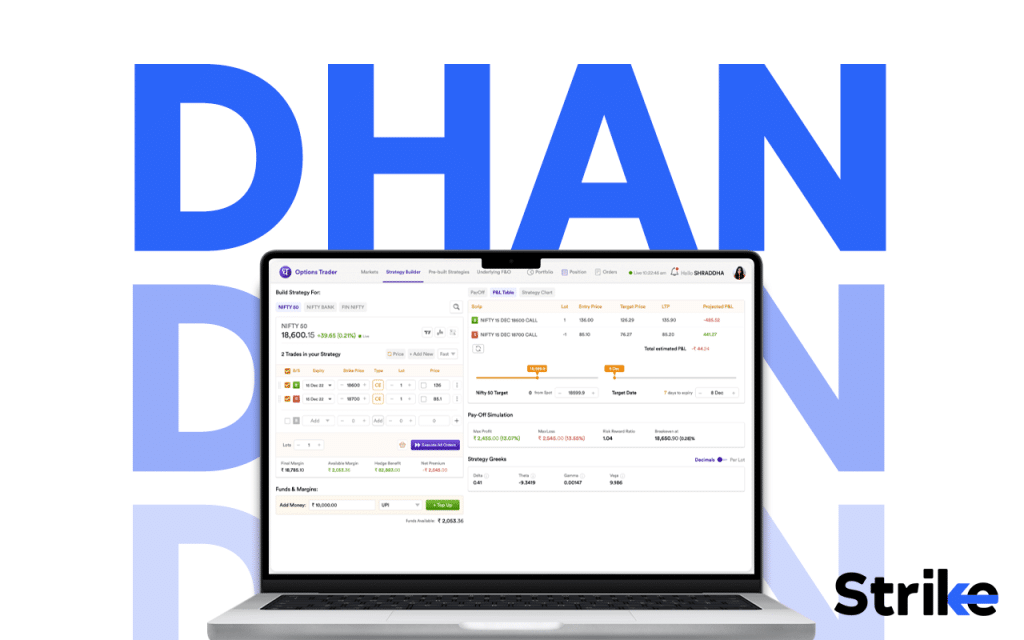
USP: Deep TradingView integration and sleek UI.
Brokerage: Rs. 20 per order.
Charges:
- AMC: Zero
- Margin: Standard SEBI rules
UI/UX: Dhan is among the most visually polished platforms. It offers a smooth mobile and web experience with advanced charting.
Speed & Reliability: Execution is extremely fast, with low downtime. The servers handle high loads effectively, making it reliable during volatility.
Features:
- Integrated Option Chain with filters
- Strategy Builder with payoff visualization
- TradingView + ChartIQ charting integration
- Basket orders with up to 10 legs
- Webhooks and APIs for automation
- Trader’s diary to track performance
Customer Support: Active in-app chat, social media, and strong community support. Faster resolution compared to Paytm Money.
Pros vs Cons:
| Pros | Cons |
| Modern UI with advanced charting | Still relatively new in the market |
| No AMC charges | Smaller offline presence |
| APIs and automation features | Community still growing |
Dhan is perfect for modern traders who want fast execution and premium charting tools without additional charges.
10. Binomo
Binomo is an international binary options platform that has gained popularity among risk-takers in India. Unlike NSE-based brokers, it operates outside SEBI regulations, making it controversial.
USP: Quick speculative trades with simplified contracts.
Brokerage: Embedded in payouts instead of traditional commissions.
Charges: No separate AMC or Demat charges.
UI/UX: The app has a very simple design targeted at beginners. Navigation is easy, but features are limited compared to NSE brokers.
Speed & Reliability: Execution is fast, but since it is not SEBI-regulated, reliability in terms of investor protection is questionable.
Features:
- Binary options contracts with short expiries
- Quick payout structure
- Demo account for practice
- Simple charts and indicators
Customer Support: Available through email and live chat. Not as structured as Indian brokers.
Pros vs Cons:
| Pros | Cons |
| Simple and beginner-friendly | Not regulated by SEBI |
| Demo account for practice | Very high risk, speculative |
| Fast execution | Limited tools and no advanced analytics |
Binomo is only suitable for speculative traders, not for serious options traders on NSE.
11. Sensibull
Sensibull is India’s first dedicated options trading platform, used by over 500,000 traders. It integrates directly with brokers like Zerodha, Upstox, and Angel One.
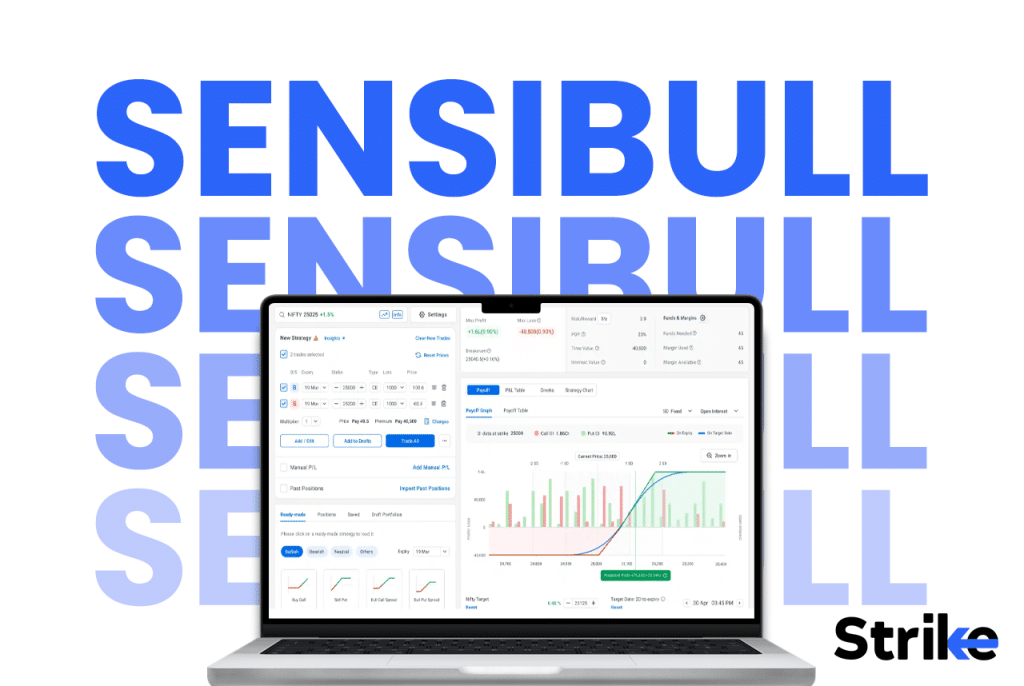
USP: Best-in-class options strategy builder and analytics.
Brokerage: Depends on the connected broker.
Charges: Free basic plan, premium plans start at Rs. 800 per month.
UI/UX: Very intuitive with a focus on strategy visualization. Designed for options rather than general stock trading.
Speed & Reliability: Since it is cloud-based, performance is fast and stable. Execution happens via linked broker accounts.
Features:
- Multi-leg strategy builder
- Payoff diagrams with breakeven points
- Virtual trading (paper trades)
- Option Chain with Greeks
- Smart screeners for opportunities
- Educational content and tutorials
Customer Support: Prompt responses through in-app support and email. Also has a large community of traders.
Pros vs Cons:
| Pros | Cons |
| Best tool for option strategies | Premium subscription required for full features |
| Virtual trading available | Cannot work standalone (needs broker) |
| Strong community and tutorials | Brokerage depends on external broker |
Sensibull is best for serious options traders who want strong analysis and strategy tools.
12. MO Trader (Motilal Oswal)
MO Trader is the flagship trading platform of Motilal Oswal, a full-service broker with decades of experience. It combines advanced tools with research-backed insights.
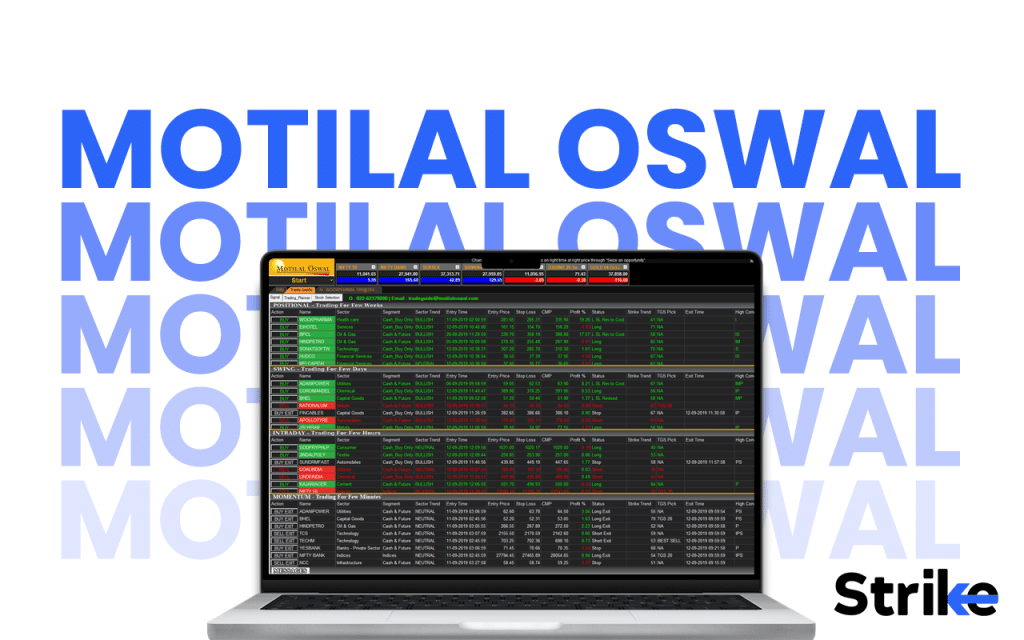
USP: Research-driven options trading.
Brokerage: Rs. 20 per executed order.
Charges:
- AMC: Rs. 400 yearly
- Margin: As per SEBI
UI/UX: The app is user-friendly with a balance of features for both new and experienced traders. Research reports are well integrated into the interface.
Speed & Reliability: Highly reliable due to Motilal Oswal’s infrastructure. Latency issues are rare.
Features:
- Options Chain with IV and OI
- Built-in strategy builder
- Access to in-house research reports
- One-click basket orders
- Coverage of equities, F&O, IPOs, and MFs
Customer Support: Dedicated relationship managers for premium users, call support, and email. Service quality is generally rated above average.
Pros vs Cons:
| Pros | Cons |
| Strong research insights integrated | AMC higher than some discount brokers |
| Reliable execution | Brokerage not cheapest |
| Good for diversified traders | Lacks modern UI polish compared to Dhan |
MO Trader is ideal for traders who want both execution and deep research support.
Comparison Between Option Trading Platforms
The top option trading platforms in India differ in brokerage, features, and user experience. Strike Money is best for analytics, Zerodha for execution, and Angel One for a balance of research and trading.
| Platform | Users | Brokerage | AMC | Margin | Key Features | Best For |
| Strike Money | 1M+ | Analytics, Greeks, backtesting | Analysis-focused traders | |||
| Zerodha Kite | 12M+ | Rs. 20/order | Rs. 300 | SEBI compliant | Fast execution, Sensibull integration | Speed & reliability |
| Angel One | 14M+ | Rs. 20/order | Rs. 240 | Limited | Research + strategy builder | Research-driven traders |
| FYERS | 1M+ | Rs. 20/order | Zero | SEBI compliant | Advanced charting, APIs | Chartists |
| 5paisa | 3M+ | Rs. 10/order | Rs. 300 | Limited | Cheapest brokerage, strategy tools | High-volume traders |
| Upstox | 8M+ | Rs. 20/order | Rs. 300 | Standard | Balanced features | Beginners |
| Paytm Money | 5M+ | Rs. 15/order | Zero | Limited | Easy UI, Paytm wallet | New traders |
| Alice Blue | 1M+ | Rs. 15/order | Rs. 400 | Standard | Algo APIs, options chain | Algo + regional traders |
| Dhan | 0.5M+ | Rs. 20/order | Zero | Standard | TradingView integration | Modern traders |
| Sensibull | 0.5M+ | Linked broker | – | – | Strategy builder, virtual trading | Strategy makers |
| MO Trader | 1M+ | Rs. 20/order | Rs. 400 | Standard | Research + F&O | Research traders |
| Kotak Neo | 2M+ | Rs. 0 intraday, Rs. 20 F&O | Rs. 300 | Standard | Bank-linked, zero intraday brokerage | Kotak clients |
| Nuvama | 1M+ | Rs. 20/order | Rs. 300 | Standard | Research + advisory | Advisory-driven traders |
| TradingView | Global | Linked broker | – | – | Charting + community | Analysts |
| Quantsapp | 0.5M+ | Subscription | – | – | Options analytics, learning | Learners |
| Samco | 0.5M+ | Rs. 20/order | Rs. 300 | Standard | StockBasket, basket trades | Low-cost traders |
| Binomo | Global | Built-in | – | – | Binary contracts | Speculators |
What are the Essential Features of an Options Trading Platform?
The essential features of an options trading platform are option chain, strategy builder, payoff charts, Greeks analysis, and charting. These tools enable informed trading decisions and reduce risks.
Key features
- Real-time Option Chain: Shows OI, IV, LTP, and volume for strike selection.
- Strategy Builder: Multi-leg execution with custom combinations.
- Payoff Visualization: Clear profit/loss outcomes across expiry prices.
- Greeks Analysis: Delta, Gamma, Vega, Theta, Rho for risk measurement.
- Charting Tools: TradingView/ChartIQ-powered with indicators.
- Simulation & Backtesting: Helps test strategies on past data.
- Execution Speed: Fast order placement reduces slippage.
- Risk Management Tools: Margin calculator, alerts, and stop-loss integration.
A good option trading platform integrates all these into a simple, reliable U
How to Choose the Right Options Trading Platform?
The right platform depends on cost, features, and trading goals. Beginners prefer simplicity, while advanced traders need data-heavy tools.
Factors to consider
- Brokerage costs: Low-cost brokers like 5paisa and Alice Blue suit high-frequency traders.
- Analytics & tools: Strike Money, Sensibull, Quantsapp are best for analytics.
- Execution speed: Zerodha, Dhan, and Upstox are strong in reliability.
- Charting quality: FYERS and TradingView lead in technical analysis.
- Research availability: Angel One, MO Trader, and Nuvama provide research reports.
- Support & community: Strike and Sensibull have strong trading communities.
A trader should map their personal style (scalping, positional, analytical, or research-based) to the platform’s strength before deciding.
What is the Difference between a Full-Service vs Discount Broker for Options Trading?
Full-service brokers provide research and advisory, while discount brokers focus on low-cost execution. The choice depends on whether a trader wants guidance or just fast trades.
| Parameter | Full-Service Broker | Discount Broker |
| Brokerage | Higher (0.2–0.5% or Rs. 30–50 per lot) | Flat Rs. 10–20 per order |
| Research | Detailed reports, analyst calls, RMs | Minimal or none |
| Services | Wealth mgmt, IPOs, bonds, PMS | Primarily equities, F&O |
| Customer Support | Dedicated relationship managers | Chat/ticket/email |
| Features | Wide product basket | Core trading + add-ons |
| Best For | Traders needing research + handholding | Self-directed traders |
What Documents are Needed to Open an Options Trading Account?
The documents required are PAN, Aadhaar, bank account details, and income proof. These are mandated by SEBI for compliance.
- PAN card (mandatory ID proof)
- Aadhaar card (address + eKYC)
- Bank account proof (cancelled cheque or bank statement)
- Income proof (ITR, salary slip, or bank statement showing income)
- Passport-sized photograph
- Digital/physical signature
These documents confirm identity, income eligibility, and compliance with SEBI norms before enabling derivatives access.
Are Options Trading Platforms Safe in India?
Yes, SEBI-registered platforms are safe for trading in India. NSE and SEBI regulations ensure investor protection and fair practices.
- Regulation: SEBI + NSE monitor every broker.
- Fund segregation: Client money is kept separate from broker funds.
- 2FA login: Apps require OTP and PIN security.
- Grievance system: NSE + SEBI handle complaints quickly.
- Audit checks: Regular inspections prevent misuse of funds.
International apps like Binomo are not SEBI-regulated and involve higher risk. Traders should prefer SEBI-registered brokers.
What are the Costs Involved in Options Trading on Various Platforms?
The costs in options trading include brokerage, STT, GST, exchange charges, SEBI fees, and stamp duty. Total cost depends on broker choice and state-specific duties.
- Brokerage: Rs. 10–20 per order (depends on broker).
- STT (Securities Transaction Tax): 0.05% on sell side of options premium.
- Transaction Charges: NSE charges ~Rs. 5,000 per crore turnover.
- SEBI Turnover Fee: Rs. 10 per crore traded.
- GST: 18% on brokerage + exchange charges.
- Stamp Duty: Varies by state, usually 0.003%–0.015%.
- AMC (Demat): Rs. 240–400 annually depending on broker.
Example: For a Rs. 1,00,000 options position:
- Brokerage = Rs. 20
- STT = Rs. 50
- Transaction + SEBI = Rs. 15
- GST = Rs. 7
- Stamp Duty = Rs. 3–5
Total = ~Rs. 95–100
This makes brokerage + STT the largest cost components for options traders.




 Previous Article

![85 Common Stock Market Terminologies for Dummies [Updated List for 2025]](https://www.strike.money/wp-content/uploads/2025/04/Popular-Stock-Market-Terms-for-Beginners-Banner.png "85 Common Stock Market Terminologies for Dummies [Updated List for 2025] 48")


No Comments Yet.